Hidden Costs of Thai International Schools: Capital Levies, Bus, Uniforms
The number a Bangkok international school prints on its website is not the number you actually pay in year one. Once you add the registration fee, a capital or building levy, transport, uniforms and exam fees, most families land 25–40% above the headline tuition figure for the first year, then settle into a smaller but still real markup every year after. On a mid-tier school charging ฿700,000 ($21,200) in tuition, that means budgeting an extra ฿175,000–280,000 ($5,300–8,500) before the first term starts.
None of this is hidden in the sense of being secret. It is hidden in the sense that it is scattered across four or five separate line items on four or five separate PDFs, and no school totals it up for you on the homepage.
Quick answer: what year one really costs
- Application fee: ฿4,000–30,000 (~$120–910) per child, non-refundable, paid just to apply
- Registration/enrollment fee: up to ฿260,000 at ISB, ฿250,000 (first child) at Patana — mostly non-refundable, one-time
- Refundable deposit: commonly ฿50,000, or a full term/year of tuition at some schools (e.g. NIST)
- Capital/building levy: ฿100,000–500,000 (~$3,000–15,150) per child, refund terms vary hugely — get them in writing
- Annual facility fee: ฿15,000–60,000 (~$450–1,800) a year, on top of tuition
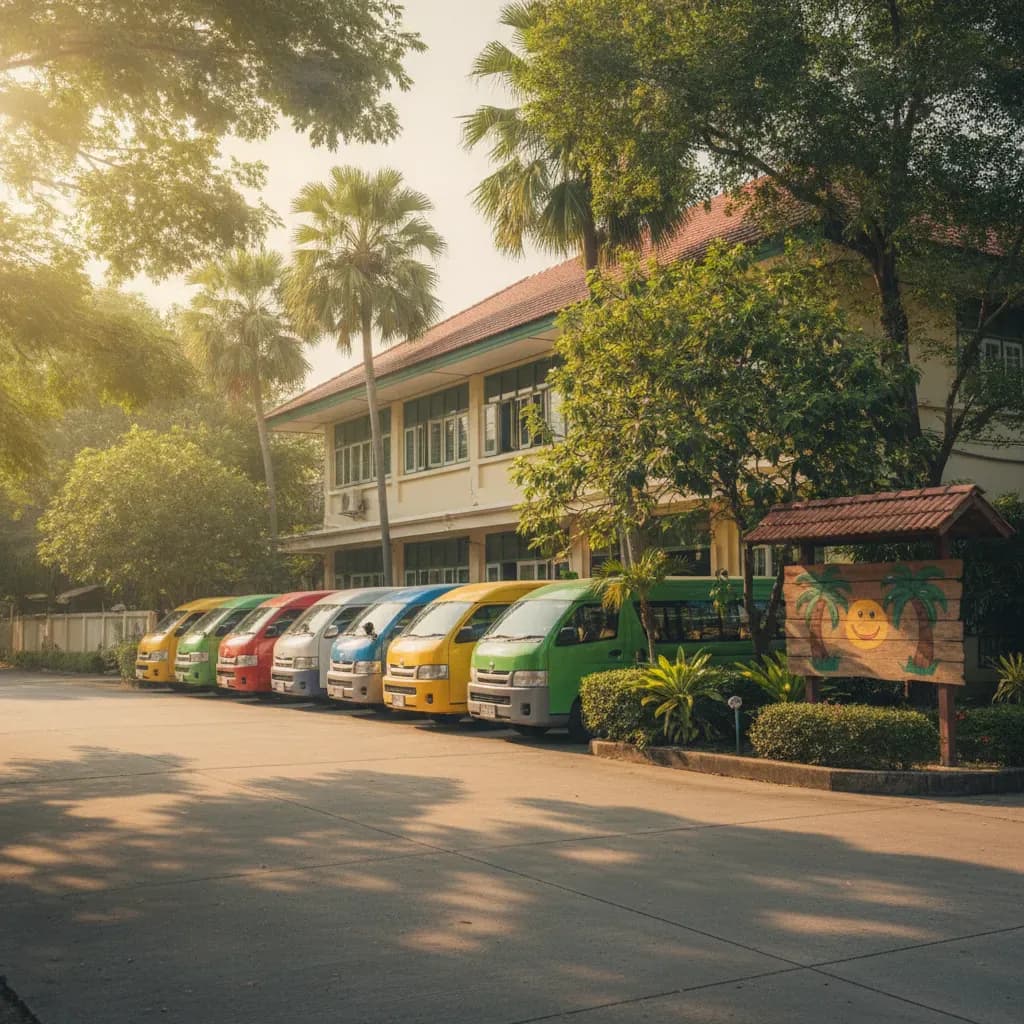
- School bus: ฿111,300–178,000 (~$3,370–5,390) a year depending on distance zone
- Uniforms, exams, lunch, trips: another ฿40,000–150,000+ (~$1,200–4,550+) in year one alone
The one-time costs that ambush new parents
Every school charges an application fee just to be considered, typically ฿4,000–30,000 per child, and it is gone whether or not the school offers you a place. ISB charges ฿4,700; Patana charges ฿4,000–5,500. This is small money by international-school standards, but it is the first of several fees that arrive before a single class has been taught.
The bigger shock is the registration or enrollment fee, charged once, in the first year a child joins. At ISB this is ฿260,000. At Bangkok Patana it is ฿250,000 for a first child and ฿200,000 for each subsequent sibling. These fees are largely non-refundable — ISB's policy waives it only if a family withdraws within the first 20 days of enrollment, and most established schools apply a similarly tight window.
Separately, many schools also collect a refundable deposit, which behaves more like a security bond against unpaid fees. Patana's is ฿50,000. Some schools structure this differently: NIST, for example, does not charge a capital levy at all but instead holds a refundable deposit equal to one full year's tuition, which is a very different cash-flow decision for a family to make.
| One-time fee | Typical range (THB) | Refundable? |
|---|---|---|
| Application fee | 4,000–30,000 | No |
| Registration/enrollment | 200,000–260,000 | Rarely, narrow window only |
| Security deposit | 50,000 (or up to 1 year tuition) | Usually yes, on clean exit |
| Capital/building levy | 100,000–500,000 | Varies by school — confirm in writing |
Source: ISB official admissions fee schedule; Bangkok Patana official fee schedule; ISchoolAdvisor 2026 Bangkok fee breakdowns · verified July 2026 · ฿33/USD.
The capital levy: the single biggest hidden cost
The capital or building-development levy is where the real money hides, and it is the fee families most often discover too late. Budget schools skip it or charge close to ฿100,000; established, campus-heavy schools charge ฿250,000–500,000 or more per child, on top of the registration fee above. On a ฿700,000-tuition school, a ฿300,000 capital levy alone adds more than 40% to the sticker price before you have paid for a single uniform.
The part that catches people out is the refund policy, because there is no industry standard. Some schools refund the full levy when a child leaves, provided the family gives proper notice and clears all outstanding fees. Others retain a portion for every year the child attended, so a family that leaves after two years gets back less than one that leaves after five. A minority of schools treat it as fully non-refundable from day one, effectively pricing it as a second registration fee under a different name. SBS International School Bangkok, for comparison, structures its version as a bond returned within a month of withdrawal once fees are cleared and a full term's notice has been given — a cleaner arrangement than most.
Ask for the capital levy refund clause in writing, not verbally from an admissions officer, before you sign anything. Get the exact wording on: minimum tenure before any refund applies, whether the refund tapers by year, and what counts as valid notice.
The annual costs that never make the tuition number
Even after the one-time fees clear, several costs repeat every year and sit outside the headline tuition figure entirely.
| Annual extra | Typical range (THB/yr) | Notes |
|---|---|---|
| Facility/building fee | 15,000–60,000 | ISB charges ~22,000/yr on top of tuition |
| School bus (by zone) | 111,300–178,000 | Distance-based; some schools cap at a flat rate |
| Uniforms (year one) | 10,000–18,000 | Plus a smaller top-up most years after |
| Catered lunch program | 25,000–50,000 | Optional at most schools, but near-universal in practice |
| External exams (IGCSE/IB/A Level, senior years only) | 30,000–100,000 | Charged only in exam years, but concentrated and large |
Source: ISB fee schedule; ISchoolAdvisor Bangkok cost breakdowns 2026; Tutopiya Bangkok international school fees 2025–2026 · verified July 2026 · ฿33/USD. Bus and exam fees vary by distance zone and subject count — treat as a range, not a quote.
The bus fee alone is a bigger line item than most families expect, because it is priced by distance zone, not as a flat add-on. A family living close to campus might pay near the bottom of the ฿111,300–178,000 band; a family in a far suburb pays closer to the top. Exam fees only bite in the senior years, but when they do, ten or more IGCSE subjects plus IB Diploma or A Level papers at ฿3,500–6,500 each can add ฿60,000–100,000 in a single exam year — a cost that is easy to forget when you are budgeting from a Year 7 admissions letter.
Putting it together: three real year-one scenarios
| Tier | Headline tuition | Realistic year-one all-in | Uplift |
|---|---|---|---|
| Budget/mid-tier | ฿450,000–620,000 | ฿600,000–850,000 | ~30–35% |
| Established mainstream | ฿700,000–900,000 | ฿950,000–1,250,000 | ~30–40% |
| Top-tier senior years (ISB, Patana) | ฿1,050,000–1,200,000+ | ฿1,400,000–1,700,000+ | ~25–35% |
Source: Thailand Ultimate cost synthesis from ISB, Bangkok Patana official fee schedules and ISchoolAdvisor/Tutopiya 2026 cost breakdowns · verified July 2026 · ฿33/USD. Individual school and grade-level mixes vary; use as planning bands, not a quote.
The pattern holds across every tier: the gap between what a school advertises and what a family actually wires in year one is rarely below 25%, and it commonly reaches 40% once a capital levy, bus fee and a full uniform set land in the same term. For a full breakdown of tuition by school and grade, see international school fees in Bangkok 2026, and for a side-by-side of the top three, ISB vs NIST vs Patana. Families weighing a cheaper route should also check cheapest international schools in Bangkok and bilingual vs international schools cost before committing to the premium tier's full cost stack.
Because this is a household budget question, not just a schools question, it is worth running the number alongside everything else a family spends in Bangkok using the cost-of-living calculator, and cross-checking against total cost to raise a kid in Bangkok as an expat for the picture beyond school fees alone.
Frequently Asked Questions
How much extra should I budget above the tuition sticker price?
Plan for 25–40% above the headline tuition figure in year one, driven mainly by the registration fee, the capital levy and transport. After year one, the recurring uplift is smaller — mostly the annual facility fee, bus and uniform top-ups — typically 10–20% above tuition alone.
Is the capital or building levy refundable?
It depends entirely on the school, and policies range from fully refundable on a clean exit to fully non-refundable from day one. Some schools taper the refund down for every year attended. Get the exact refund clause in writing before enrolling — do not rely on a verbal answer from an admissions office.
Do all schools charge a capital levy?
No. Some schools, including NIST, do not charge a separate capital levy and instead hold a refundable deposit equal to a full year's tuition. This changes the cash-flow math significantly, since that money is fully returnable rather than partly or fully retained.
How much does the school bus really cost?
Budget ฿111,300–178,000 a year (~$3,370–5,390), priced by distance zone rather than as a flat fee. Families living close to campus land near the bottom of that range; those in outer suburbs pay closer to the top.
Are exam fees included in tuition?
Usually not. External exam fees for IGCSE, IB Diploma, A Level or AP papers run ฿3,500–6,500 per subject and are billed separately in the exam years, adding ฿30,000–100,000 in a single senior year depending on subject count.
The bottom line
Treat the tuition figure on a school's website as the floor, not the total. Before you commit, ask for a complete written fee schedule that names every one-time charge, every annual extra, and the exact refund terms on the capital levy. A family that does this math up front avoids the worst version of this problem: discovering a ฿300,000 levy and a ฿150,000 bus bill in the same enrollment week they were only expecting to pay tuition.
Sources
- ISB (International School Bangkok) official admissions fee schedule, accessed 2026-07-10
- Bangkok Patana School official fee schedule, accessed 2026-07-10
- ISchoolAdvisor, Bangkok international school fee breakdowns, 2026
- Tutopiya, Bangkok international school fees 2025–2026