FCD Account (Foreign Currency Deposit): What It Is and When You Need One
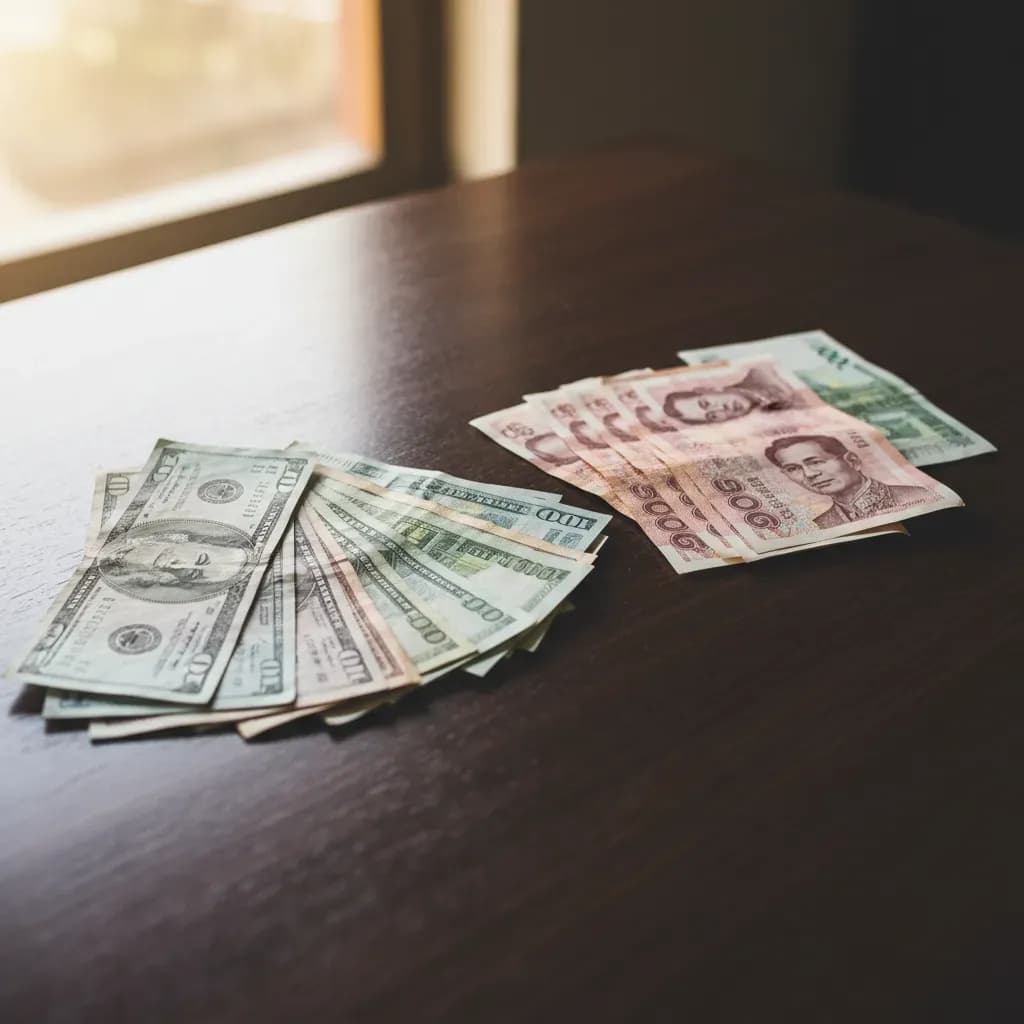
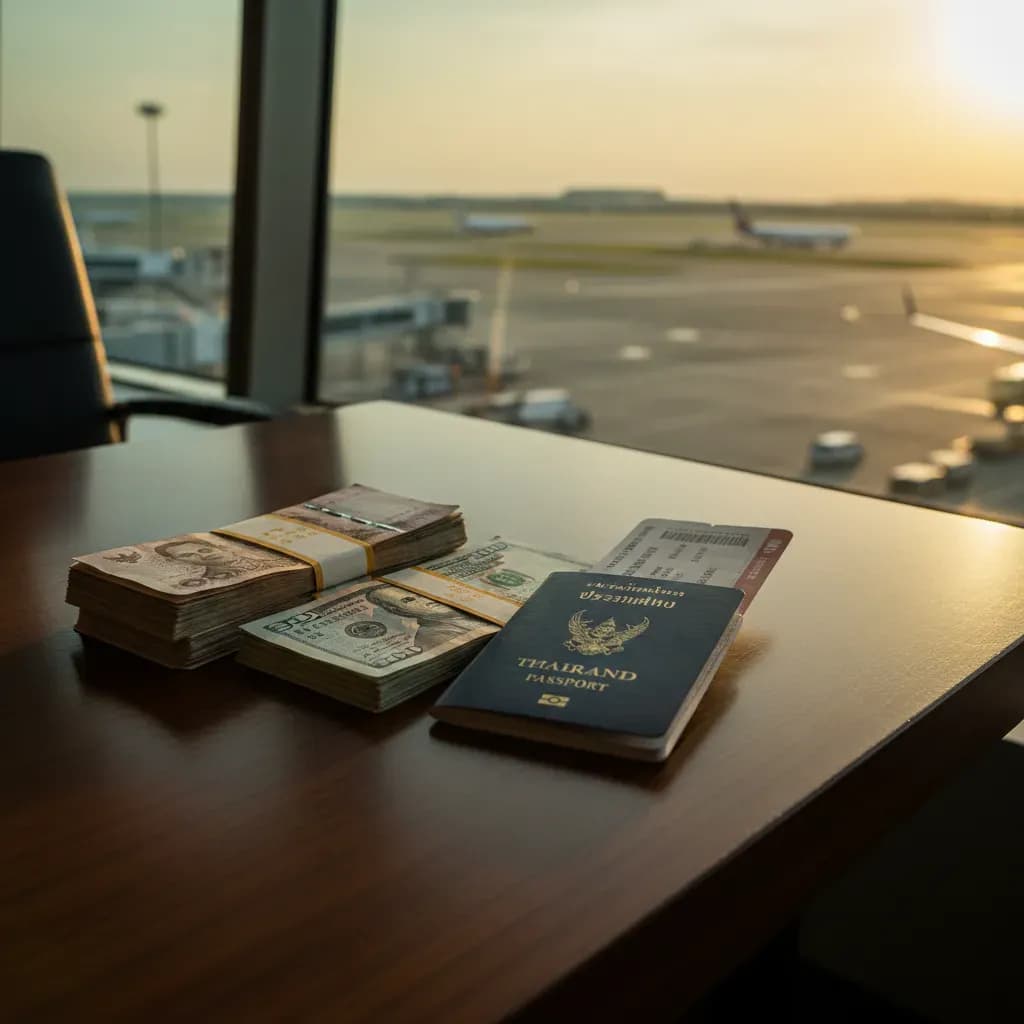
An FCD, or Foreign Currency Deposit account, lets you hold US dollars, British pounds, euros or Australian dollars in a Thai bank without converting the money to baht the moment it lands. Bangkok Bank's standard non-resident FCD needs a first deposit of USD 1,000 (or the equivalent) and a monthly average balance of USD 250. You keep the cash in its original currency and choose when to convert it, which matters most for condo buyers and anyone moving a large sum who wants to time the exchange rate rather than take whatever the bank offers on deposit day.
Quick answer
- What it is: a Thai bank account denominated in a foreign currency (USD, GBP, EUR, AUD, often SGD, HKD, JPY), not baht.
- Minimum to open (Bangkok Bank, non-resident): USD 1,000 first deposit, USD 250 monthly average. Bangkok Bank's FCD Fixed Extra term product needs USD 10,000.
- You choose the conversion moment: funds sit in the original currency until you instruct the bank to convert, not an automatic same-day conversion.
- Why condo buyers care: foreign-quota condo money must arrive from abroad in foreign currency and convert to baht inside Thailand — an FCD account is one clean way to hold it first.
- The paperwork matters more than the account: you still need the bank's FET form (or a Confirmation Letter under USD 50,000) to register ownership at the land office, FCD or not.
How it actually works
The balance stays in dollars, pounds, euros or another accepted currency, not baht. Money wired in sits there earning little to no interest until you tell the bank to convert some or all of it at whatever rate you accept that day — you decouple the moment your money arrives from the moment it gets converted, so a weak-baht day on arrival doesn't force a bad rate on you. Bangkok Bank is the most commonly cited provider; SCB and other major banks offer comparable products, though documentation varies and eligibility tightens the further you are from a long-stay visa.
The FET form connection
Foreigners can only own a condo unit freehold if the purchase money arrives from overseas in foreign currency and converts to baht on Thai soil — a baht transfer or cash deposited locally doesn't qualify. An FCD account is a legitimate way to receive that money before conversion, but the account itself isn't what satisfies the land office. That's the FET form, issued by the receiving bank on any inbound transfer, or FCD withdrawal, of USD 50,000 or more. Below that, banks issue a Confirmation Letter of International Funds Transfer instead. Keep either document for registering ownership, and again if you sell and want to repatriate proceeds cleanly — see bringing money in for a condo purchase for the full mechanics.
| Transfer size | Document issued | Where it matters |
|---|---|---|
| Under USD 50,000 | Confirmation Letter of International Funds Transfer | Smaller condo purchases, proof of remittance |
| USD 50,000+ | FET form | Foreign-quota condo registration; repatriating sale proceeds |
| USD 200,000+ | Enhanced source-of-funds checks (some banks) | Larger purchases — practitioner-reported, unconfirmed on bot.or.th |
Source: Thailand Law Online; Bangkok Bank FCD documentation · verified July 2026 · ฿33/USD. The USD 200,000 detail is practitioner-blog sourced, not a confirmed BOT circular.
Most expats living on a monthly income never need one — a baht savings account plus Wise for transfers covers daily life. An FCD earns its keep for condo buyers, anyone holding a lump sum who wants to wait out a weak baht, or income arriving in multiple currencies.
Frequently Asked Questions
Can I open an FCD account without a Thai visa?
It depends on the bank. Non-resident FCD accounts generally need a passport and proof of address at minimum; some banks also ask for a work permit or long-term visa, and DTV holders are being refused ordinary Thai bank accounts almost universally in 2026 — that can extend to FCD applications too. Confirm with the branch directly.
Does an FCD account earn interest?
Rates are typically low to negligible, well below a baht fixed deposit. The account buys currency flexibility, not yield — for interest, see fixed deposits for foreigners.
Do I need an FCD account to buy a condo in Thailand?
No. You need proof the money arrived from abroad in foreign currency and converted to baht in Thailand — an FET form (USD 50,000+) or Confirmation Letter (below that). A direct SWIFT transfer into a baht account, properly documented, works just as well.
The bottom line
An FCD account has one job: hold foreign currency in Thailand without converting it to baht on arrival. Bangkok Bank's non-resident version opens with USD 1,000, low enough that condo buyers and anyone moving a large sum should consider it. But the account isn't the compliance step — the FET form or Confirmation Letter documenting where your money came from is what the land office and tax office actually care about.
Sources
- Bangkok Bank, FCD Account for Non-Residents, accessed 2026-07-11
- Bangkok Bank, Special Foreign Currency Deposit (SFCD) Requirements, accessed 2026-07-11
- SCB, Foreign Currency Deposit (FCD), accessed 2026-07-11
- Thailand Law Online, Condo Purchase Currency FET Form Remittance, accessed 2026-07-11
- VERIFIED-FACTS-2026-07.md §6 Banking, Thailand Ultimate research dossier