Buying a Condo: FET Forms & Bringing Purchase Money Into Thailand
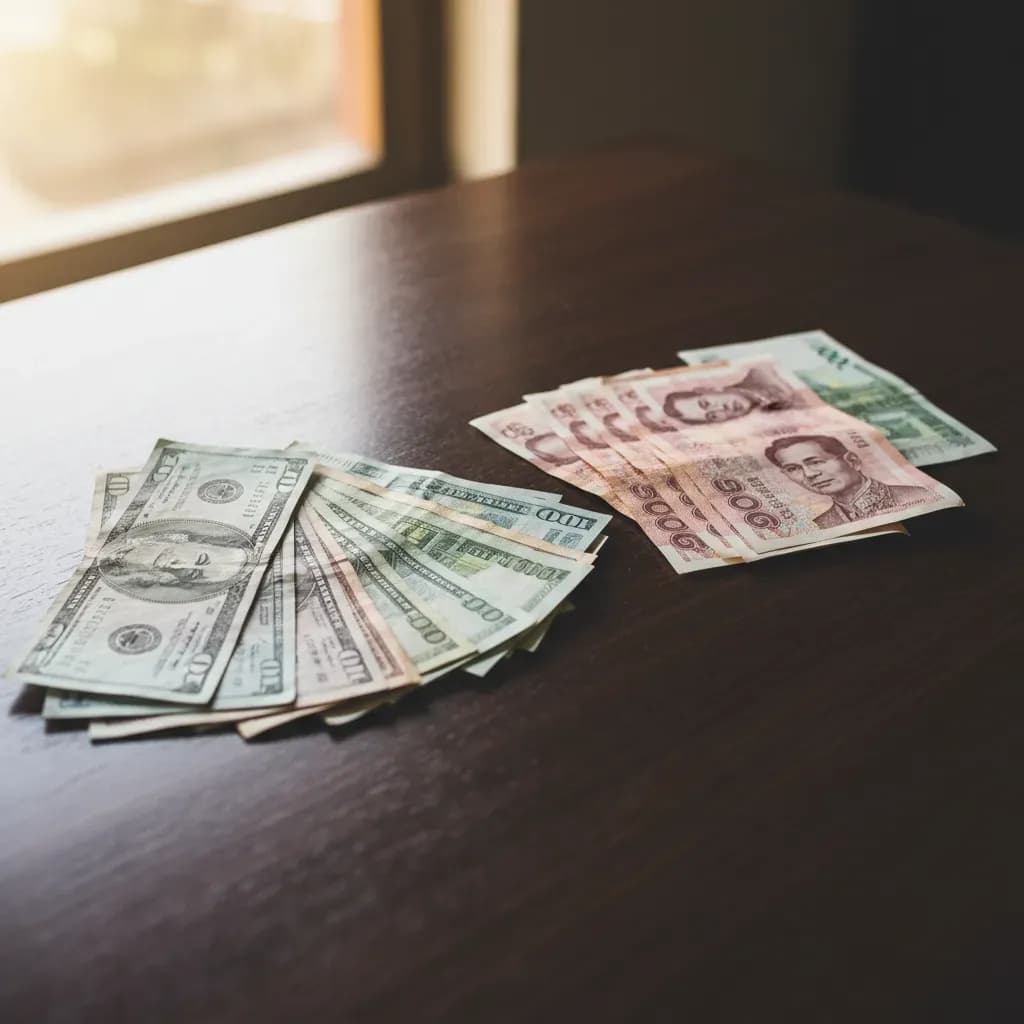
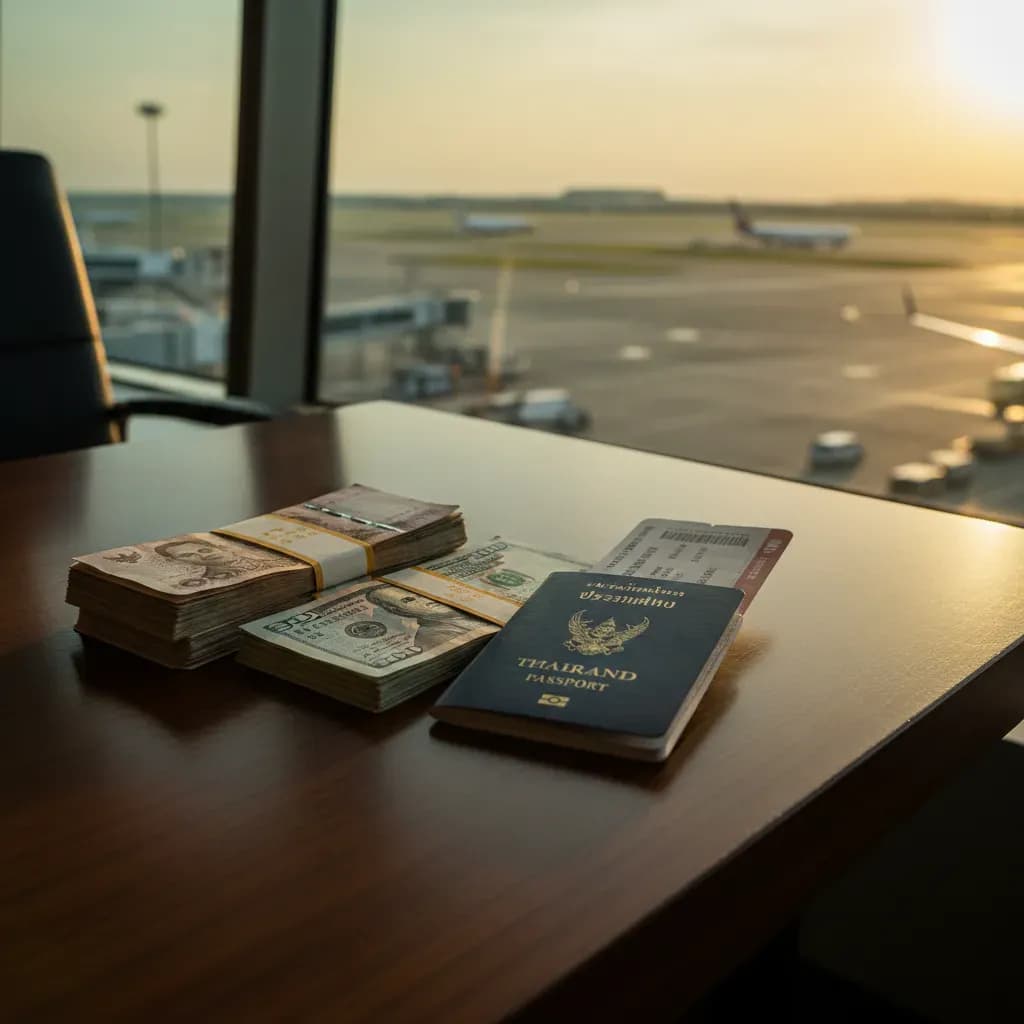
To own a Thai condo unit as freehold, the purchase money has to arrive from outside Thailand in foreign currency and get converted into baht by a Thai bank inside the country. If that inbound transfer is USD 50,000 or more (~฿1.65 million at ฿33/USD), the receiving bank must issue a Foreign Exchange Transaction (FET) form and report it to the Bank of Thailand; below that, a credit note or confirmation letter usually stands in. Either document is what the Land Office checks before registering you as freehold owner, and it's the same document that lets you send sale proceeds back out years later without a fight.
This page covers money only. For the buying process, contracts and viewings, see our sibling site thailandcondoshop.com.
Quick answer
- Foreign quota: foreigners can hold freehold title on up to 49% of a condo building's total floor area; the other 51% must be Thai-held.
- FET trigger: an inbound remittance of USD 50,000+ forces the bank to issue an FET form and report it to the Bank of Thailand.
- Under USD 50,000: the bank can issue a simpler credit note / confirmation letter instead, which the Land Office also accepts.
- Funds must be foreign currency, converted in Thailand — a domestic baht transfer from a Thai account does not qualify for freehold registration.
- All-in transfer costs at closing: roughly 6–8% of the purchase price once you add the transfer fee, stamp duty or specific business tax, and withholding tax.
- Keep the original FET/credit note forever — it is the paper trail that lets you repatriate the money tax-free when you sell.
Why the money has to come from abroad in foreign currency
Thailand's Condominium Act (B.E. 2522, Section 19) is the reason foreigners can own condo units outright at all, but it comes with a condition: the funds must be proven to have entered Thailand from overseas, in foreign currency, and been converted to baht here. Move baht between two Thai accounts, or pay with locally sourced cash, and you cannot register freehold title — the Land Office refuses regardless of what the sale contract says.
The other half of the puzzle is the 49% foreign quota: foreigners can collectively hold freehold title on no more than 49% of a building's total floor area, measured across all units, not per floor. It's checked at transfer registration, not when you sign the reservation or sale agreement — so a developer can take your deposit while room remains, and other foreign buyers can fill the quota before your transfer date arrives. If it's full when you show up, the Land Office won't register your purchase, and you'd need to wait for a unit to free up or switch to leasehold.
The FET form, explained
The Foreign Exchange Transaction form, still commonly called by its old name Thor Tor 3, is a bank-issued document certifying that money arrived from abroad in a named foreign currency and was converted to baht on a given date, showing sender, receiving account, amount and conversion.
Thai banks must prepare one and report it to the Bank of Thailand for any inbound remittance of USD 50,000 or more. Below that, the bank can instead issue a lighter credit note based on the SWIFT details, which the Land Office generally accepts too. Either way, the paperwork needs your own name as sender or beneficiary — money arriving under a parent's, friend's or company's name can cause real problems at registration.
A frequently repeated online claim is that transfers above roughly USD 200,000 trigger "enhanced due diligence" at Thai banks. That detail is mostly law-firm-blog sourced rather than confirmed on a Bank of Thailand publication — treat it as plausible but unverified, and check with your receiving bank before moving very large sums.
Getting the money into Thailand
Three realistic channels fund a condo purchase, and they are not equally good at producing the paperwork the Land Office wants.
| Method | Speed | FET-ready paper trail? | Cost |
|---|---|---|---|
| Wise | Same-day typical | Yes — deposits THB directly | ~0.6% + small fixed fee, mid-market rate |
| SWIFT wire | 1–3 business days | Yes — the classic route | ~$35 send + ~$15 receive + up to 3.5% FX markup |
| Revolut | N/A | No — can't fund a Thai account | Not usable for the transfer itself |
Source: PhuketExpatGuide; Wise Help Centre; Revolut product pages, cross-checked against VERIFIED-FACTS-2026-07.md · verified July 2026 · ฿33/USD.
Many buyers still use a SWIFT wire for a sum this size, since it gives an unfamiliar bank the cleanest trail even though it costs more than Wise. A Foreign Currency Deposit (FCD) account is worth opening in advance if you'd rather hold USD, GBP or EUR and time the conversion — Bangkok Bank's FCD needs only a USD 1,000 minimum deposit. See sending money into Thailand and Wise versus Revolut for the mechanics, and how to open a Thai bank account in 2026 if you don't have one — DTV holders are refused new accounts almost universally in 2026, so settle your visa status first.
At the transfer appointment, the Land Office officer wants three things: the original FET form (or credit note), your passport, and the signed sale agreement. The FET amount should be at least equal to the purchase price — remit slightly more to cover fees. If funds came in across several smaller transfers, keep every credit note; the total and the names just need to line up.
What it costs to transfer, beyond the purchase price
Budget roughly 6–8% of the purchase price in one-off transaction costs at closing, on top of the price itself.
| Fee | Rate | Who typically pays |
|---|---|---|
| Transfer fee | 2% of appraised value | Split 50/50 buyer/seller, negotiable |
| Specific Business Tax (SBT) | 3.3% | Seller, if owned under 5 years |
| Stamp duty (instead of SBT) | 0.5% | Seller, if owned 5+ years |
| Withholding tax | 1% (corporate) or progressive (individual) | Seller |
Source: Forbes & Partners Thailand Property Transfer Cost & Tax Breakdown 2025/2026; SamuiForSale transfer fees guide, accessed 2026-07-11 · verified July 2026 · ฿33/USD.
SBT and stamp duty are mutually exclusive — only one applies, depending on how long the seller has owned the unit — and both are legally the seller's obligation, though in practice they get negotiated into the price. A reduced 0.01% transfer-fee rate has applied to residential property up to ฿7 million between April 2025 and June 2026, but as of mid-2026 that discount is limited to Thai nationals — confirm at the Land Office branch before assuming it applies to you.
Why this matters at resale
The FET form you filed away years ago becomes your exit ticket. To move sale proceeds back out, banks want the original FET (or credit note), the Land Office sale agreement, and the tax receipt. Repatriating up to your original FET figure is procedurally clean; the profit above it needs extra explanation but is still movable. Without the original FET, sellers get stuck explaining a transaction the bank has no record of, delaying a wire by weeks. See transferring money out of Thailand for how outbound wires work — any gain is a separate question from Thai income tax on remittances if you're a resident bringing other foreign income in that same year.
Weighing a purchase against renting long-term into retirement? See renting versus buying a condo for retirement for the capital-versus-flexibility trade-off.
Frequently Asked Questions
What is a FET form and why does my condo purchase need one?
An FET (Foreign Exchange Transaction) form is a Thai bank's certification that money arrived from abroad in foreign currency and was converted into baht inside Thailand. The Condominium Act requires this proof before the Land Office will register a foreigner as freehold owner — without it, the purchase can't go through as freehold.
At what amount does a bank have to issue an FET form?
USD 50,000 or more (about ฿1.65 million at ฿33/USD) per inbound transfer. Below that, the bank can instead give a credit note or confirmation letter based on the SWIFT transfer, which the Land Office generally accepts as equivalent proof.
Can I use baht already sitting in a Thai bank account to buy a condo freehold?
No. The funds must have entered Thailand from abroad in foreign currency and been converted here. Baht that originated inside Thailand, even in your own account, doesn't satisfy that — you'd need a leasehold structure instead.
How much of a condo building can foreigners actually own?
Up to 49% of the total floor area of any single building, measured across all units, not per floor. The Land Office checks this at the moment you register the transfer, and it can fill up between your reservation and your transfer date, so confirm current quota status before you commit money.
Do I need the FET form again when I sell?
Yes. To repatriate sale proceeds, banks want the original FET (or credit note), the Land Office sale agreement, and the tax receipt. Keep the original safe for as long as you own the unit — replacing a lost FET later is far harder than filing it away now.
The bottom line
The FET form decides two big moments in a foreign condo purchase: whether the Land Office will let you register freehold at all, and whether you can get your money back out cleanly when you sell. Wire the funds from abroad in foreign currency, keep the amount at or above the purchase price, put your own name on the transfer, and file the original FET or credit note somewhere you'll still find it in ten years. Everything else about buying — viewings, contracts, due diligence — is a process question for the buying-focused sibling site.
Sources
- Bank of Thailand Exchange Control Regulations, accessed 2026-07-11
- PropertyScout, 'The FET: All There Is to Know About Foreign Transaction Forms in Thailand', accessed 2026-07-11
- SamuiForSale, Foreign Exchange Transaction Form guide, accessed 2026-07-11
- Forbes & Partners, Thailand Property Transfer Cost & Tax Breakdown 2025/2026, accessed 2026-07-11
- Thailand Condominium Act B.E. 2522, Section 19, accessed 2026-07-11
- VERIFIED-FACTS-2026-07.md internal dossier, research date 2026-07-10