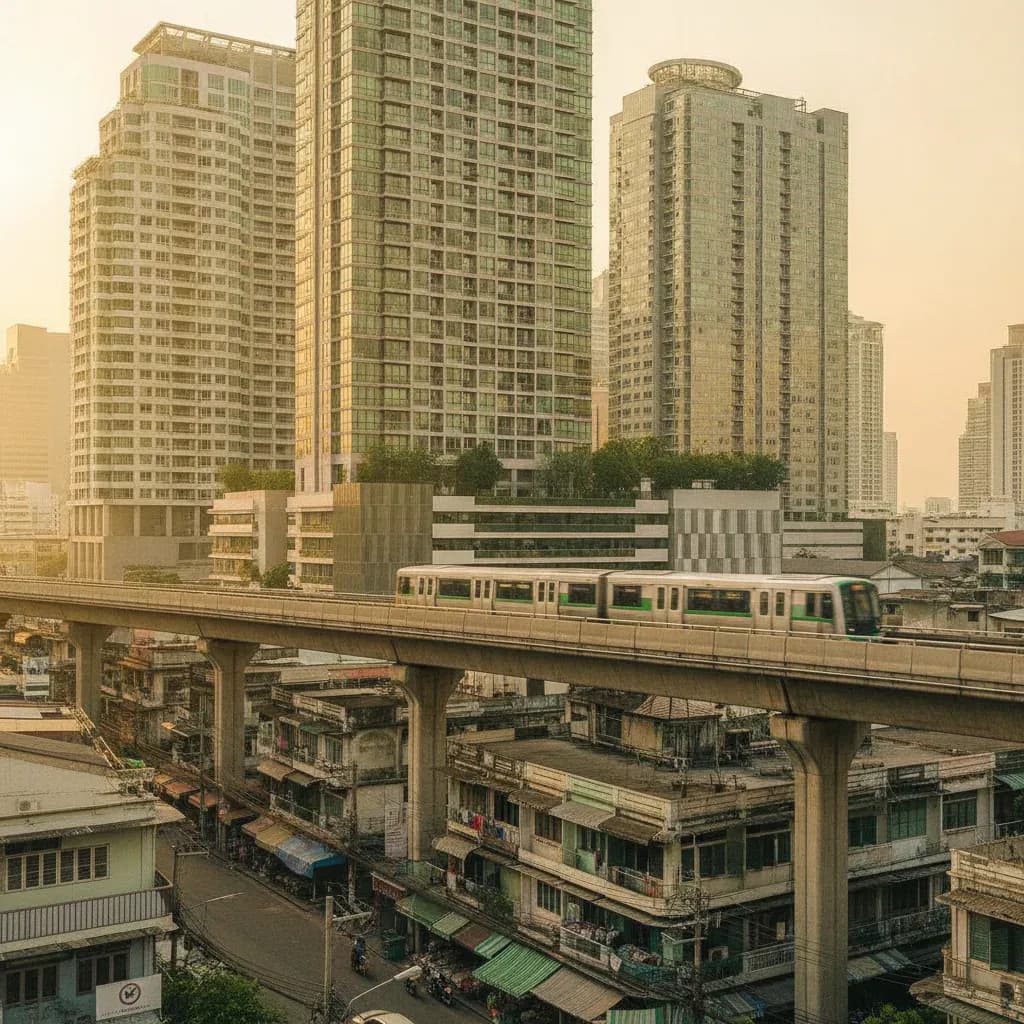
Living in Thailand Without a Thai Bank Account: The Full Stack
Most DTV holders and long-stay tourists in 2026 never open a Thai bank account, because branches routinely turn them away. The workaround is a Wise (or similar) multi-currency card for spending and ATM withdrawals, cash for anything needing baht in hand, and a Thai e-wallet like TrueMoney for QR payments — each foreign-card ATM withdrawal costs roughly ฿220–350 (~$7–11) on top of your card's own fee. It's not as cheap as local banking, but it's a fully workable stack for a year or more.
Quick answer
- DTV and tourist visa holders are refused Thai bank accounts near-universally in 2026 at BBL, KBank, SCB, Krungthai and Krungsri — treat any branch that says yes as a lucky exception, not a plan.
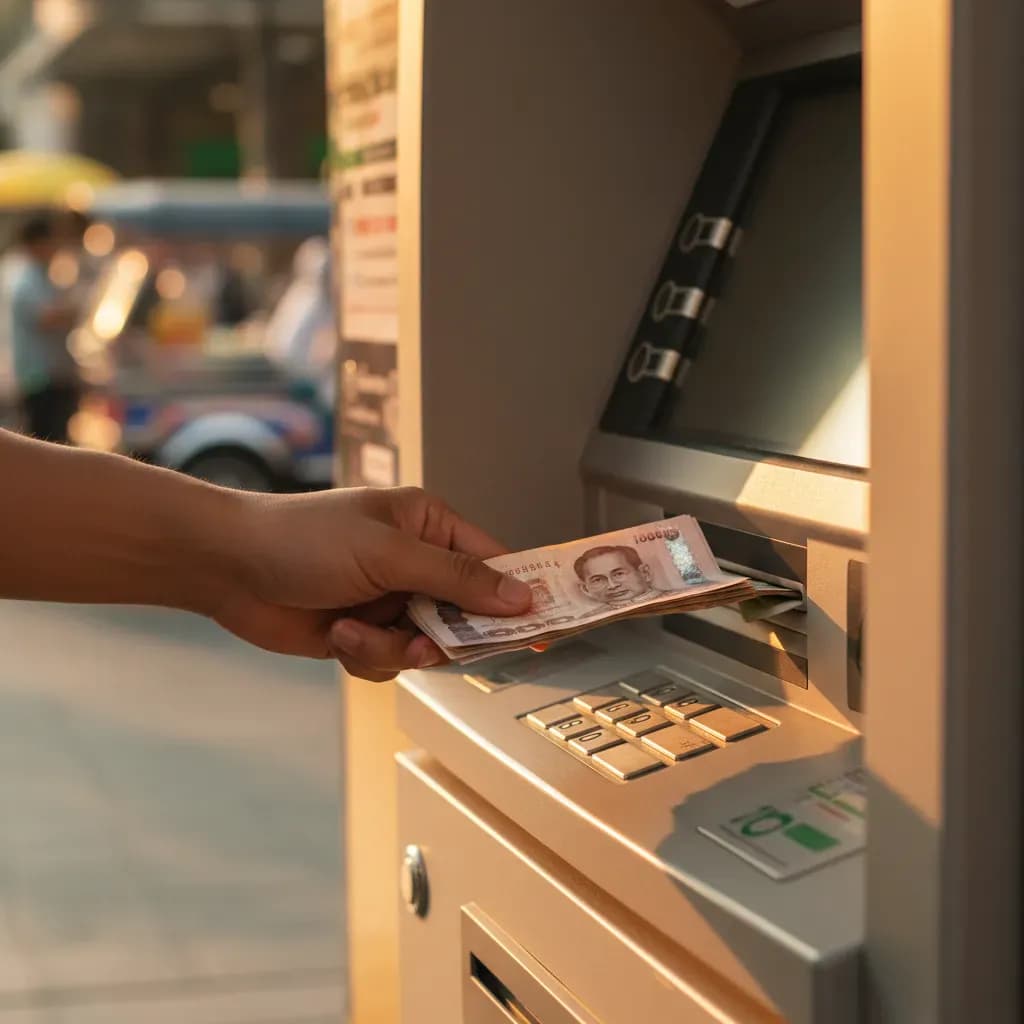
- Foreign-card ATM withdrawals run ฿220–350 per withdrawal regardless of amount, so always withdraw a large sum, not several small ones.
- A Wise card is the backbone of the stack: near mid-market FX, and (per Wise's own help pages) a monthly fee-free ATM allowance of roughly €250 or local equivalent before its own withdrawal fee kicks in.
- TrueMoney Wallet scans Thai PromptPay QR codes without a Thai bank account, topped up with cash at 7-Eleven, but caps your balance at ฿30,000 once verified.
- Rent and bills are the hard part — most landlords want a bank transfer or PromptPay, so budget for cash negotiations or a TrueMoney/Wise workaround.
- This is a spending-money stack, not a savings-and-visa stack — retirement, marriage and LTR visas need Thai-account seasoning this setup can't replace. See DTV financial requirements if that's your actual goal.
Why so many people are doing this in 2026
Thai banks tightened KYC hard after 2025's anti-mule crackdown, and DTV is classified as a tourist-category visa in their eyes. A polite refusal with no written reason is now the standard branch response, even with a lease and a Thai phone number in hand. LTR visa holders get a real path in — KBank opens accounts for LTR holders at any branch, no appointment — but that path doesn't exist for DTV or tourist status. Read opening a Thai bank account on a DTV if you want to try anyway; otherwise, build the whole stack around foreign accounts, cards and cash instead.
The stack: four pieces, each doing one job
No single tool replaces a Thai bank account. The workable setup layers four things, each covering what the others can't.
| Layer | Job | Typical cost |
|---|---|---|
| Foreign/home bank account | Where your salary or pension actually lands | Whatever your home bank charges |
| Wise (or similar) multi-currency card | Card spending + ATM cash + holding THB balance | ~0.4–2% conversion + local ATM fee |
| Cash | Rent negotiation, markets, small vendors, tuk-tuks | Free once withdrawn |
| TrueMoney Wallet or similar Thai e-wallet | Scanning PromptPay QR codes at shops and some landlords | Free to open, ฿30,000 balance cap |
Source: Thailand Ultimate stack analysis, cross-checked against Wise Help Centre and TrueMoney Support · verified July 2026 · ฿33/USD.
Wise is the workhorse because it holds and converts 40-plus currencies, spends directly in THB near the mid-market rate, and covers ATM withdrawals nationwide. Revolut is a common second choice for spending, but as of mid-2026 it still can't hold baht or send to a Thai bank account — see Wise vs Revolut for Thailand for the full comparison.
ATM strategy: minimize the ฿220–350 tax on your own cash
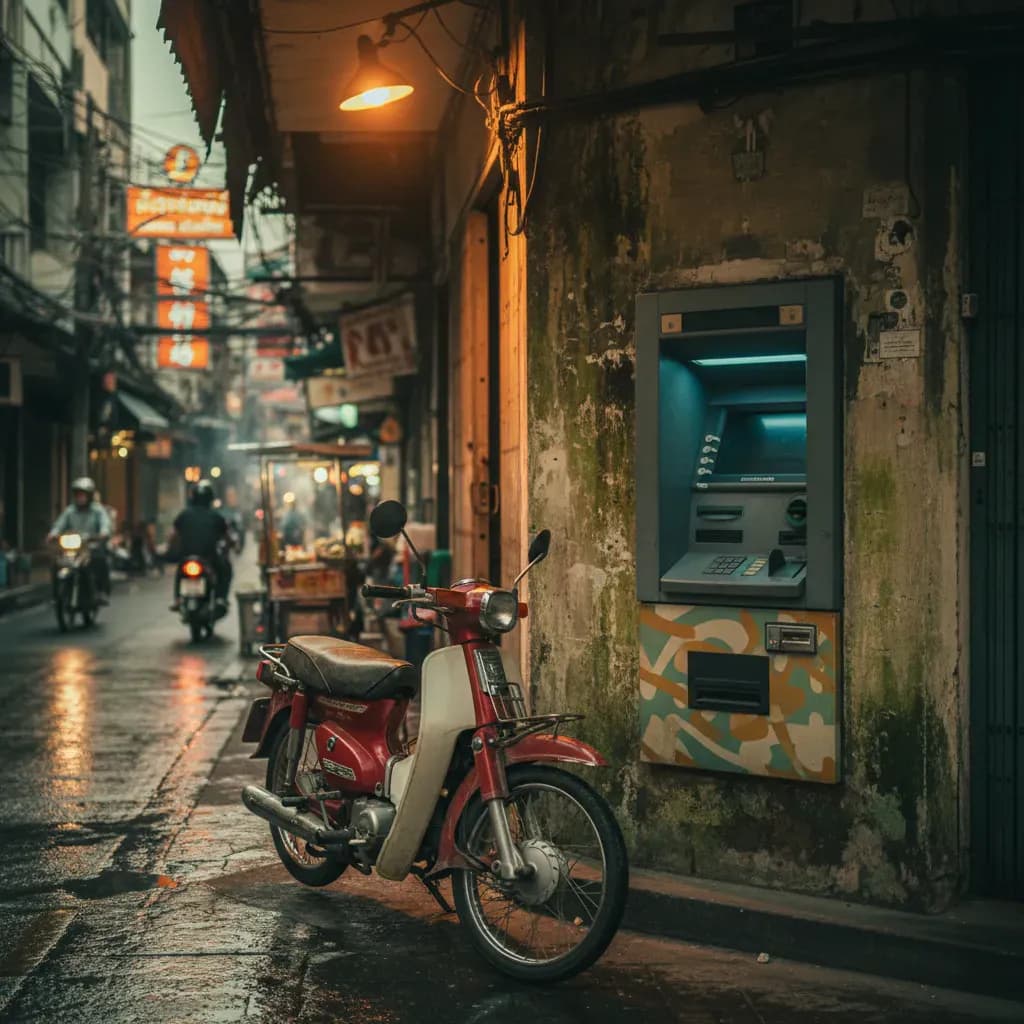
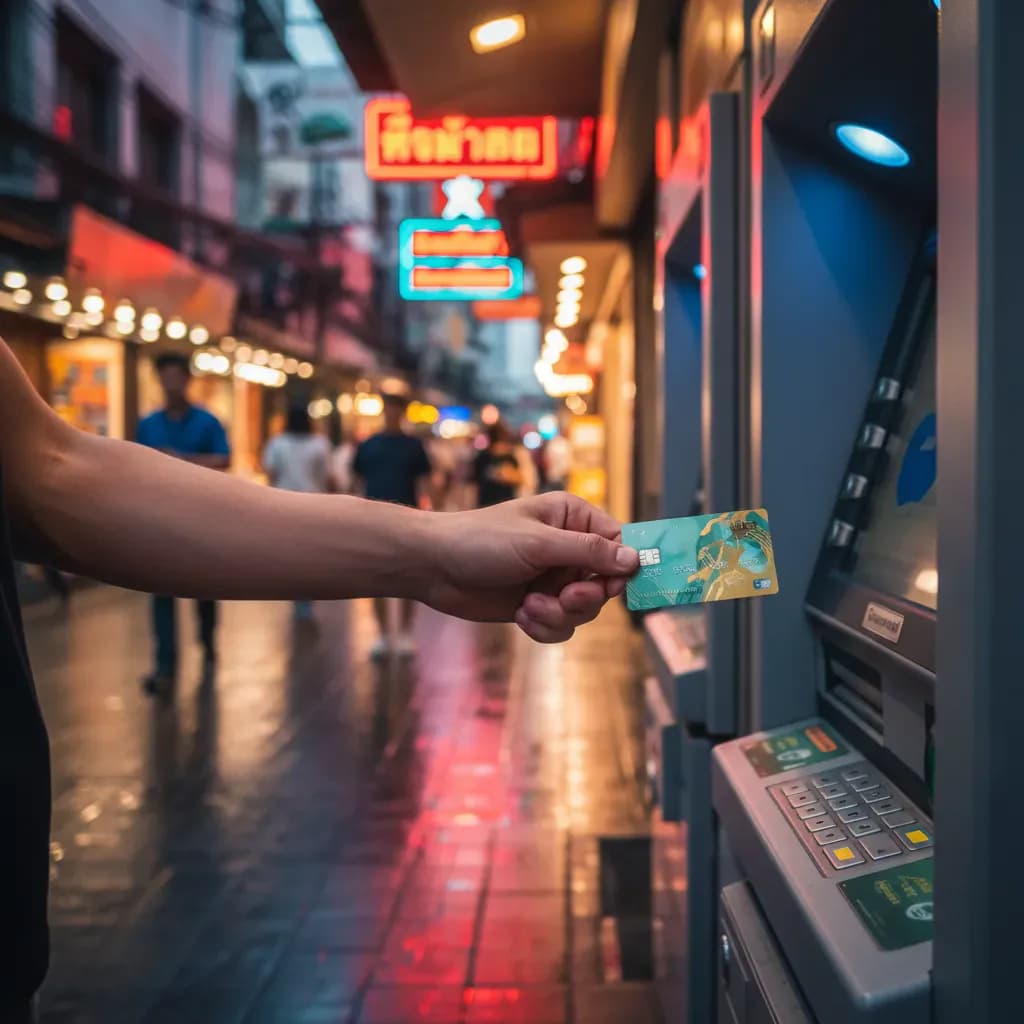
Every foreign-card ATM withdrawal in Thailand carries a flat, per-withdrawal local fee that has crept up in 2026 — it's no longer the flat 220 THB people quote from a few years back. Visa and UnionPay cards are commonly charged around ฿250, some foreign Mastercards get hit with ฿350, and AEON machines are the cheapest widely-available option at roughly ฿150. Since the fee is flat, not a percentage, the biggest lever you control is withdrawing larger amounts less often.
| Machine / network | Typical local ATM fee | Notes |
|---|---|---|
| AEON | ~฿150 | Cheapest common option |
| Bank ATMs, Visa/UnionPay card | ~฿250 | Now the effective baseline, not ฿220 |
| Bank ATMs, some foreign Mastercards | up to ~฿350 | Confirm with your card issuer before relying on it |
Source: Wise ATM guides and Thailand banking commentary, 2026 · verified July 2026 · ฿33/USD. Fees vary by bank and machine; always check the on-screen fee disclosure before confirming a withdrawal.
Your card provider adds its own layer on top. Wise's help pages describe a monthly fee-free ATM allowance of roughly €250 (or the equivalent in your card's home currency) before its own withdrawal fee applies — check the current terms in-app rather than assume a number. Either way, the Thai-side machine fee hits every withdrawal regardless of provider, so fewer, bigger withdrawals still win. Full details live on Thailand ATM fees for foreign cards.
Paying rent and bills without a Thai account
This is where the stack gets awkward, because most landlords and utility providers expect PromptPay transfers or bank deposits, not cash or foreign cards.
Rent. Landlords used to DTV tenants often accept cash handed over monthly, or a Wise transfer straight to their own Thai bank account (Wise sends THB to a Thai account without you needing one). Others insist on PromptPay. If so, TrueMoney — opened with just a passport, topped up with cash at 7-Eleven — sends and receives through the PromptPay network. Wise has also begun rolling out its own PromptPay QR access via a newly licensed Thai entity from May 2026. This is genuinely new, reported across expat blogs but not yet fully documented on Wise's own site, so confirm it in-app before relying on it for rent.
Utilities and phone bills. Condo management and utility companies increasingly accept cash payment at 7-Eleven or Tesco Lotus counters via a barcode on the bill, sidestepping the bank-account problem entirely. Ask your condo office for a cash-payable barcode bill.
The ceiling. TrueMoney's ฿30,000 balance cap covers day-to-day spending and smaller rent, but it's no substitute for a real account once rent runs into the tens of thousands.
The limits you'll hit
Every piece of this stack has a ceiling, and they matter more the longer you stay.
- No seasoning history. Retirement extensions (800,000 THB, 2+ months) and marriage visas (400,000 THB, 2–3 months) require money seasoned in a Thai account — a foreign Wise balance can't satisfy that. Check DTV financial requirements before assuming otherwise.
- No FET form access. Buying a condo as a foreigner requires funds to arrive from abroad and convert inside Thailand, generating a Foreign Exchange Transaction (FET) form for transfers of USD 50,000-plus. A Wise-and-cash stack never produces that paper trail. See buying a condo, FET forms and bringing money.
- Tax residency still applies regardless of how you spend. 180+ days in Thailand in a calendar year makes you a tax resident, and the remittance rule (Por 161/162, effective 1 Jan 2024) taxes foreign-sourced income brought in the year it's remitted. Advisors generally treat spending a foreign card or e-wallet inside Thailand as bringing that money in — the rail changes, not the tax question. See the tax status tracker.
- Cash limits and comfort. Carrying large cash sums for rent is a real security tradeoff — weigh it against the small savings over a bank transfer.
When you should stop avoiding a Thai account
If you're moving toward LTR, a work permit, retirement extension, or marriage visa, a Thai account stops being optional and becomes the cheaper, simpler path — LTR holders get near-guaranteed access at KBank with no appointment. See how to open a Thai bank account in 2026 and best Thai bank for foreigners for which categories open doors.
Frequently Asked Questions
Can a DTV visa holder open a Thai bank account in 2026?
Rarely, and never as a guarantee. Major banks (BBL, KBank, SCB, Krungthai, Krungsri) refuse DTV holders near-universally under 2026 KYC rules that treat DTV as tourist-category. A few branches in tourist areas occasionally make exceptions, but plan your finances assuming you won't get one.
What's the cheapest way to withdraw cash from ATMs in Thailand without a Thai account?
Use a Wise (or similar) card and withdraw large amounts infrequently, since the Thai-side fee (roughly ฿220–350) is flat per withdrawal. AEON ATMs are the cheapest widely available option at around ฿150. Check your card provider's monthly fee-free allowance too, since local and provider fees stack.
Can I pay rent in Thailand without a Thai bank account?
Yes, but expect friction. Cash-in-hand works with landlords used to DTV tenants. If a landlord insists on PromptPay, TrueMoney (opened with just a passport, topped up with cash) can send PromptPay payments, and Wise has begun rolling out its own PromptPay access in Thailand as of May 2026 — confirm current availability in-app first.
Does living on a Wise card avoid Thai tax on foreign income?
No. Thai tax residency (180+ days a year) triggers the remittance rule regardless of payment method — advisors generally treat spending foreign-sourced income via card or e-wallet inside Thailand as bringing that money in. The rail doesn't change whether it's remitted.
Is TrueMoney Wallet a real substitute for a Thai bank account?
Only for small-scale spending. It lets foreigners scan PromptPay QR codes without a Thai bank account, but verified accounts cap at ฿30,000, and it can't handle visa fund seasoning, condo purchases, or large transfers.
The bottom line
A Wise card, cash, and a Thai e-wallet get you through a full year in Thailand without ever holding a Thai bank account — plenty of tourists and DTV holders already do exactly this. What that stack can't do is season visa funds, generate an FET form, or change your Thai tax residency math. Know which of those you'll eventually need, and build toward a real Thai account (usually via LTR, a work permit, or a retirement extension) before the day you actually need one.
Sources
- Bank of Thailand exchange control regulation, accessed 2026-07-10
- Wise Help Centre, ATM withdrawal structure and fees, 2026
- Wise Thailand blog, PromptPay/QR payment guides, accessed 2026-07-11
- TrueMoney Support, balance and transaction limits, accessed 2026-07-11
- MBMG Group, DTV banking access notes, 2026