Thailand ATM Fees for Foreign Cards: The 220-Baht Problem & Workarounds
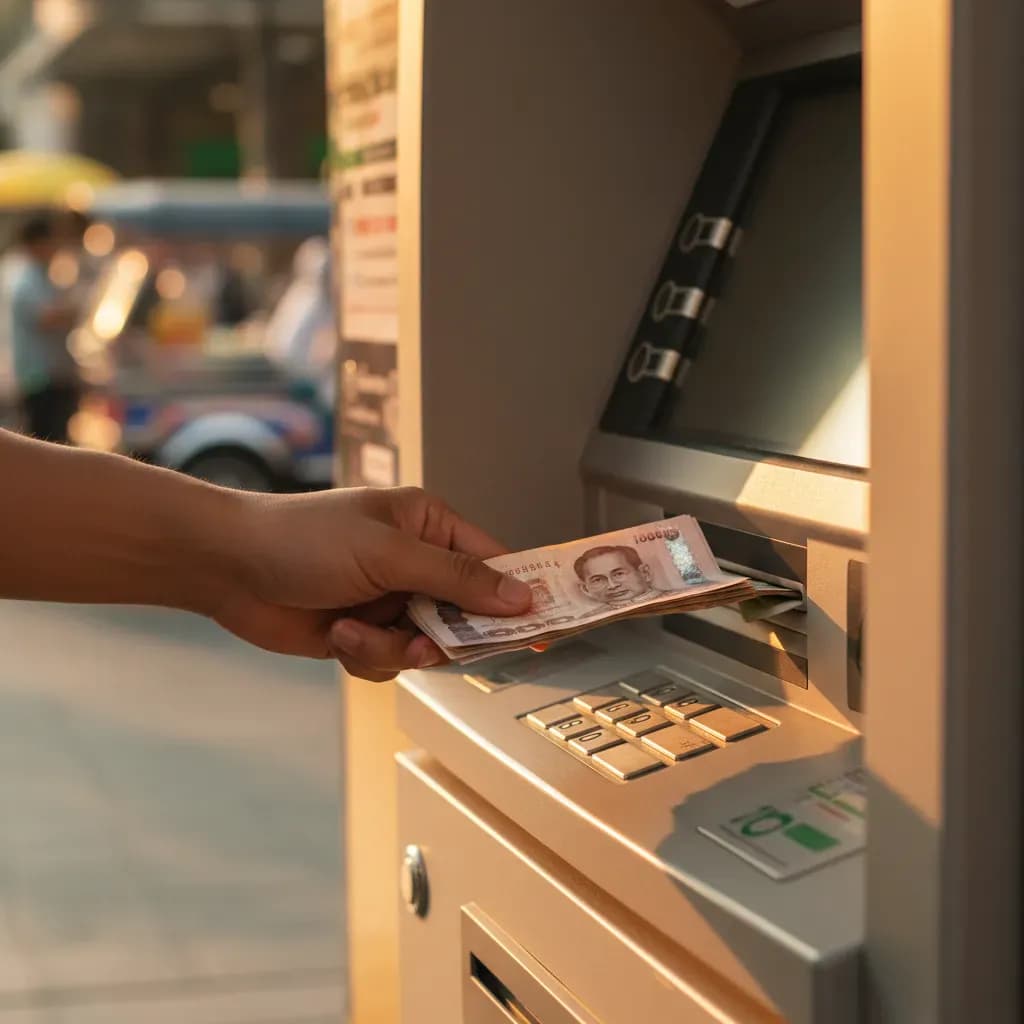
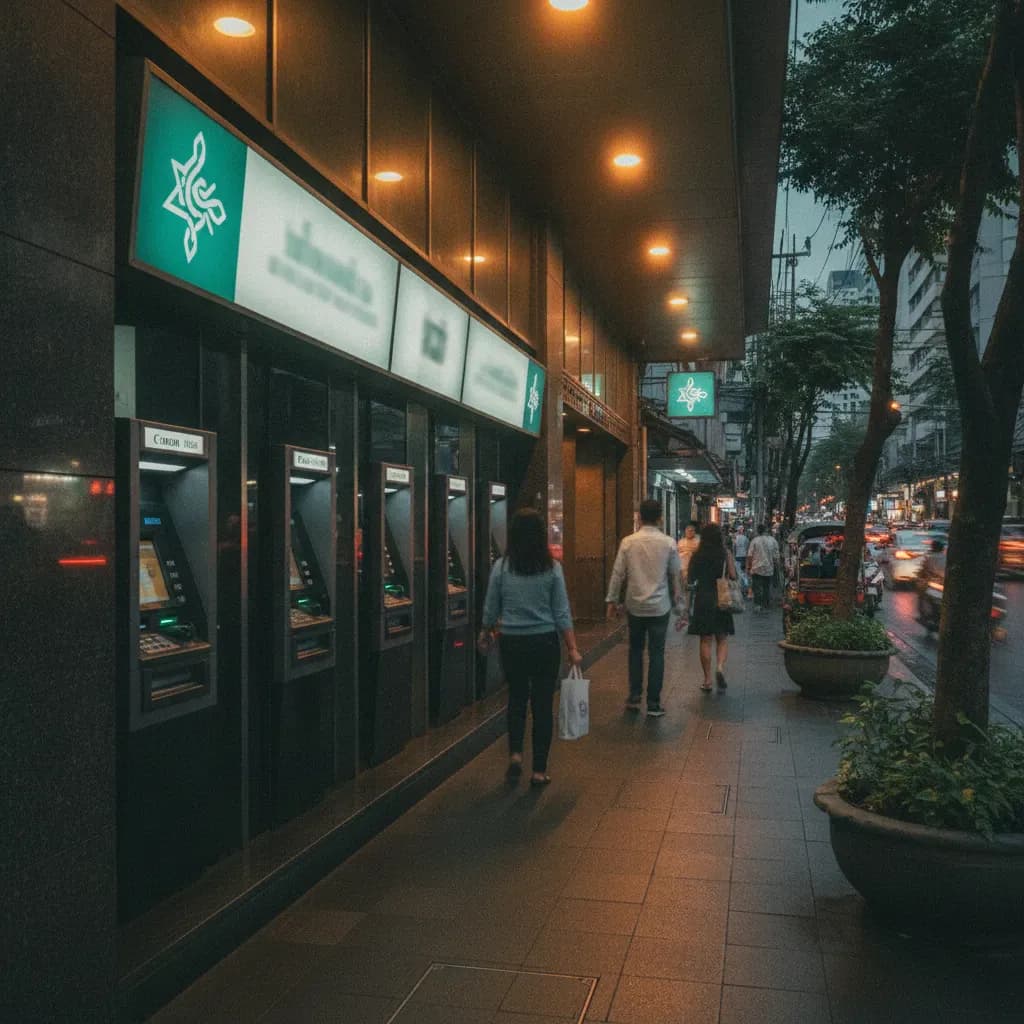
Every Thai bank ATM now charges a foreign card ฿250 to ฿350 (~$7.60–10.60) per withdrawal, not the flat ฿220 baseline that still circulates in older travel guides. In 2026 the split runs ฿250 for Visa and UnionPay cards and up to ฿350 for foreign-issued Mastercard cards at several major banks, while AEON's own machines undercut everyone at roughly ฿150 flat. The fee is charged once per transaction regardless of how much cash comes out, so the single biggest lever you control is withdrawing more, less often.
This stacks with whatever your home bank already bills for foreign use. Get the mechanics wrong and a year of casual ATM runs in Thailand can quietly cost ฿10,000–15,000 in fees you never needed to pay.
Quick answer: what a withdrawal actually costs you
- Standard Thai bank ATM fee, foreign card, 2026: ฿250 (Visa/UnionPay) to ฿350 (foreign Mastercard) per withdrawal — the old "220 baht" figure is now a floor, not the going rate.
- AEON Bank ATMs (inside Big C and Lotus's stores): a flat ~฿150 regardless of card network — the cheapest machine in the country.
- The fee doesn't scale with amount. Pulling ฿20,000 in one go costs the same ฿250–350 as pulling ฿5,000.
- Per-transaction withdrawal caps run ฿20,000–30,000 at most banks; Krungsri and CIMB allow ฿30,000, UOB up to ฿50,000, most others cap at ฿20,000.
- Your home bank adds its own cut — typically a 1–3% foreign transaction fee plus an FX markup on top of the Thai ATM surcharge.
- Workarounds: an AEON machine, a Wise card's monthly fee-free allowance, an FCD account for large sums held in foreign currency, or a Thai bank account once you qualify for one.
The fee stack: what actually leaves your account
Three separate charges can apply to a single foreign-card withdrawal in Thailand, and travel blogs usually mention only the first one. The Thai bank that owns the ATM charges its own flat surcharge (the ฿250–350 above), deducted in baht and shown on-screen before you confirm. Your home bank or card issuer then adds a foreign transaction fee, commonly 1–3% of the withdrawal amount on standard cards (many premium travel cards waive this). Finally, whichever party converts the currency — the Thai ATM's "dynamic currency conversion" prompt or your card network's rate — applies an exchange-rate markup, which is why declining the ATM's offered conversion and choosing "charge in THB" almost always gets you a better rate.
A single ฿10,000 withdrawal on a basic foreign debit card can therefore cost the ฿250–350 Thai surcharge plus ฿100–300 in issuer fees and markup — call it ฿350–650 total, or roughly 3.5–6.5% of the cash you actually get to spend.
Foreign-card ATM fee by network and bank, 2026
| ATM operator / network | Foreign-card fee | Notes |
|---|---|---|
| Most major Thai banks — Visa / UnionPay | ~฿250 | Bangkok Bank, Kasikorn, SCB, Krungthai and others |
| Most major Thai banks — foreign Mastercard | ~฿350 | Krungsri and Kasikorn confirmed at this tier in 2026 |
| AEON Bank (inside Big C / Lotus's) | ~฿150 | Cheapest widely available option; ฿20,000 cap per transaction |
| Old "baseline" figure still quoted online | ฿220 | Outdated — treat as a floor, not today's typical fee |
Source: YouTrip Thailand ATM Withdrawal Guide 2026; Thailand Expat Hub / Superagent fee tracking 2026; AEON Thana Sinsap official ATM fee schedule, accessed 2026-07-10 · verified July 2026 · ฿33/USD. Exact fee depends on the specific bank and card network combination — check the on-screen quote before confirming.
Why the flat fee changes your withdrawal strategy
Because the surcharge is per-transaction, not a percentage, the math rewards fewer, bigger withdrawals hard. Say you need ฿20,000 in cash over a week.
| Withdrawal pattern | Number of transactions | Thai ATM fees paid |
|---|---|---|
| One ฿20,000 withdrawal | 1 | ฿250–350 |
| Four ฿5,000 withdrawals | 4 | ฿1,000–1,400 |
| Ten ฿2,000 withdrawals | 10 | ฿2,500–3,500 |
Source: Thailand Ultimate calculation using the 2026 ฿250–350 fee range above · verified July 2026 · ฿33/USD. Excludes any home-bank foreign transaction fee or FX markup, which is charged separately per transaction on top of these figures.
The gap between the best and worst pattern is over ฿3,000 a month. The only real constraints are the per-transaction cap each bank applies (below) and the small personal-safety cost of carrying ฿20,000+ in cash. A reasonable middle ground is one withdrawal near the bank's maximum every one to two weeks rather than daily top-ups.
Withdrawal limits per transaction
| Bank / ATM | Max per transaction (foreign card) |
|---|---|
| Bangkok Bank | ฿25,000 |
| Krungsri (Bank of Ayudhya) | ฿30,000 |
| CIMB Thai | ฿30,000 |
| UOB Thailand | ฿50,000 |
| Kasikorn, SCB, Krungthai (typical) | ฿20,000 |
| AEON Bank | ฿20,000 |
Source: YouTrip Thailand ATM Withdrawal Guide 2026; The Thailand Life ATM guide, 2026 · verified July 2026 · ฿33/USD. There's generally no daily cap on the number of transactions, only a per-transaction ceiling — you can repeat a withdrawal back-to-back, each time paying the flat fee again.
Workarounds that actually reduce what you pay
Use AEON machines when one is nearby. At roughly ฿150 flat, AEON undercuts every major Thai bank by ฿100–200 per withdrawal. The catch is coverage — AEON ATMs sit inside Big C and Lotus's stores, common in Bangkok and provincial towns but not on every corner.
Carry a Wise card. Wise gives cardholders a monthly fee-free ATM withdrawal allowance (the exact amount depends on your card's issuing country and has changed more than once in 2026, so check the current limit in-app under "Account limits"). That allowance covers Wise's own fee — the Thai ATM's ฿250–350 surcharge still applies separately, since it comes from the machine's owner, not Wise. Wise also holds baht directly and can fund a Thai bank account same-day, a separate and often cheaper route for larger sums; see our Wise vs Revolut comparison, since Revolut cannot hold or send THB directly.
Open a Foreign Currency Deposit (FCD) account for anything beyond pocket cash. An FCD lets you hold incoming USD, GBP, EUR or AUD without converting to baht immediately, then convert in a lump sum when the rate suits you and withdraw baht from a linked Thai account — useful for moving in savings rather than living off ATM runs. Details are on our FCD accounts page.
Open a Thai bank account once you qualify. A Thai debit card avoids the foreign-card surcharge on your own bank's ATMs entirely, though small fees can still apply at other banks' machines. Account-opening rules tightened in 2026 and depend heavily on your visa type — see how to open a Thai bank account for what actually works by visa category first.
Compare remittance to ATM withdrawals for anything large. Moving more than a few thousand dollars almost always beats a string of ATM trips on fees and exchange rate — see cheapest ways to send money to Thailand and currency exchange best rates. Budgeting a full month around these numbers? The cost of living in Bangkok breakdown shows where cash typically goes once it's out of the ATM.
Frequently Asked Questions
What is the 220-baht ATM fee in Thailand?
It's the older baseline surcharge Thai banks charged foreign cards per ATM withdrawal. By 2026 that figure is mostly outdated — the typical fee is now ฿250 for Visa and UnionPay cards and up to ฿350 for foreign Mastercard cards, with AEON's machines the main exception at around ฿150. See our 220-baht ATM fee FAQ for the short version.
Is the Thailand ATM fee a percentage or a flat charge?
Flat, per transaction — it doesn't scale with how much you withdraw. That means withdrawing ฿20,000 in one trip costs the same ฿250–350 as withdrawing ฿5,000, so bigger, less frequent withdrawals are almost always cheaper overall.
Which ATM has the lowest fee for foreign cards in Thailand?
AEON Bank, at roughly ฿150 per withdrawal versus ฿250–350 at most major Thai banks. AEON ATMs are located inside Big C and Lotus's stores rather than as standalone bank branches, so availability varies by town.
Does my home bank charge anything on top of the Thai ATM fee?
Usually yes. Most standard debit and credit cards carry a 1–3% foreign transaction fee, and currency conversion (whether done by your card network or the ATM's own "dynamic currency conversion" prompt) adds a further markup. Always decline the ATM's offered conversion and choose to be charged in THB — your card network's rate is normally better than the machine's.
Can I avoid Thai ATM fees completely?
Not entirely, but you can get close. A Thai bank account removes the foreign-card surcharge on your own bank's machines, an AEON withdrawal cuts the fee to about half, and a Wise card's monthly free allowance offsets Wise's own charge (the Thai machine's surcharge still applies). None of these fully eliminate the cost of getting cash from a Thai ATM as a foreign cardholder.
The bottom line
Budget ฿250–350 every time you use a foreign card at a Thai ATM in 2026, not the old ฿220 figure, and treat AEON as your go-to when one's nearby. Because the fee is flat per transaction, the real skill is discipline: pull out two weeks of cash in one go instead of topping up every few days, and route anything beyond pocket money through Wise, an FCD account, or a proper transfer service instead of the ATM network altogether.
Sources
- YouTrip Thailand ATM Withdrawal Guide, 2026
- Thailand Expat Hub / Superagent ATM fee tracking, 2026
- AEON Thana Sinsap (Thailand) official ATM fee schedule, accessed 2026-07-10
- Wise Help Centre, ATM withdrawal structure and fees, accessed 2026-07-10
- WalletHub, Foreign Transaction Fees 2026