Hospital Prices in Thailand 2026: Private vs Government
A basic outpatient visit costs ฿500–1,500 (~$15–45) at a Thai government hospital in 2026, versus ฿1,500–4,500 (~$45–135) at a private hospital — roughly three times more for a shorter wait and an English-speaking doctor. The gap widens fast on imaging and procedures: the same MRI scan runs about ฿7,500 at a public teaching hospital like Chulalongkorn versus ฿20,000–40,000 at a private facility such as Bangkok Hospital. Both systems can deliver good medicine. Which one makes sense depends on what you are treating, how urgently, and whether you have insurance.
This page compares the two tracks head to head — cost, wait time, quality signals, and where each one wins — then points you to the procedure-specific pages for exact numbers. Every figure here is in Thai baht first, with US dollars in parentheses at the site anchor of ฿33/USD (rates move; this is a July 2026 snapshot).
Quick answer: public vs private at a glance
- Outpatient GP visit: ฿500–1,500 public vs ฿1,500–4,500 private
- Specialist consultation (private): ฿2,000–5,000; GP consultation (private): ฿1,500–3,000
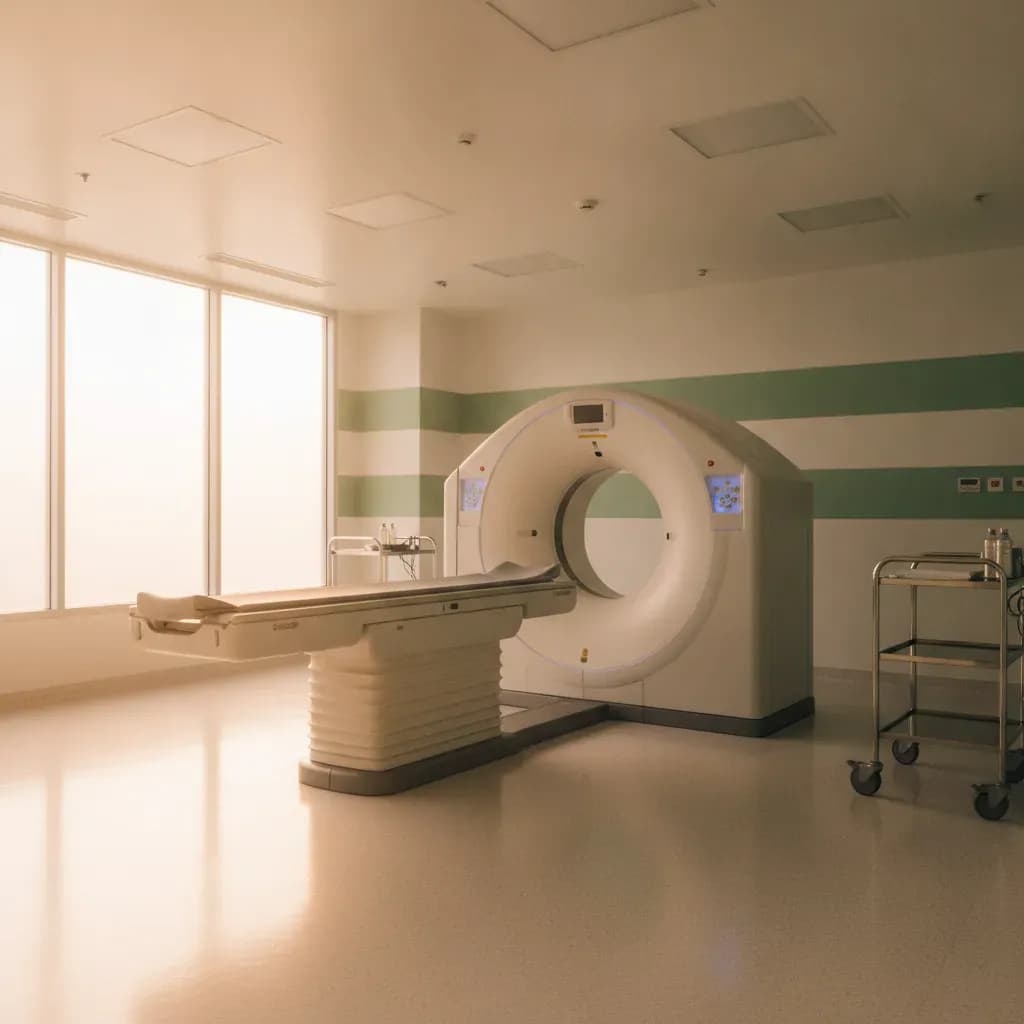
- MRI (single region): ~฿7,500 public vs ฿20,000–40,000 private (full-body scans run ฿40,000–60,000)
- Private single-room inpatient stay: ฿5,000–15,000/night standard, ฿25,000+ for VIP suites
- Quality gap: most JCI-accredited hospitals in Asia are Thai; private care runs roughly 30–50% below Singapore and about 70% below Western prices for comparable quality
- The catch: hospital price lists are indicative, not binding — get a written quote before anything beyond a routine visit
Why the same treatment costs three times more at a private hospital
Government hospitals in Thailand — places like Siriraj, Ramathibodi, and the provincial hospitals under the Ministry of Public Health — serve the Thai population first, foreigners second, and price accordingly. An outpatient visit including a basic consultation and simple medication can land at ฿500–1,500. The tradeoff is volume: Thai public hospitals routinely see hundreds of patients a day, and a visit that starts with a 6 a.m. queue number can still mean a two- to four-hour wait before you see a doctor. English-speaking staff are inconsistent outside Bangkok's flagship public teaching hospitals, and paperwork defaults to Thai.
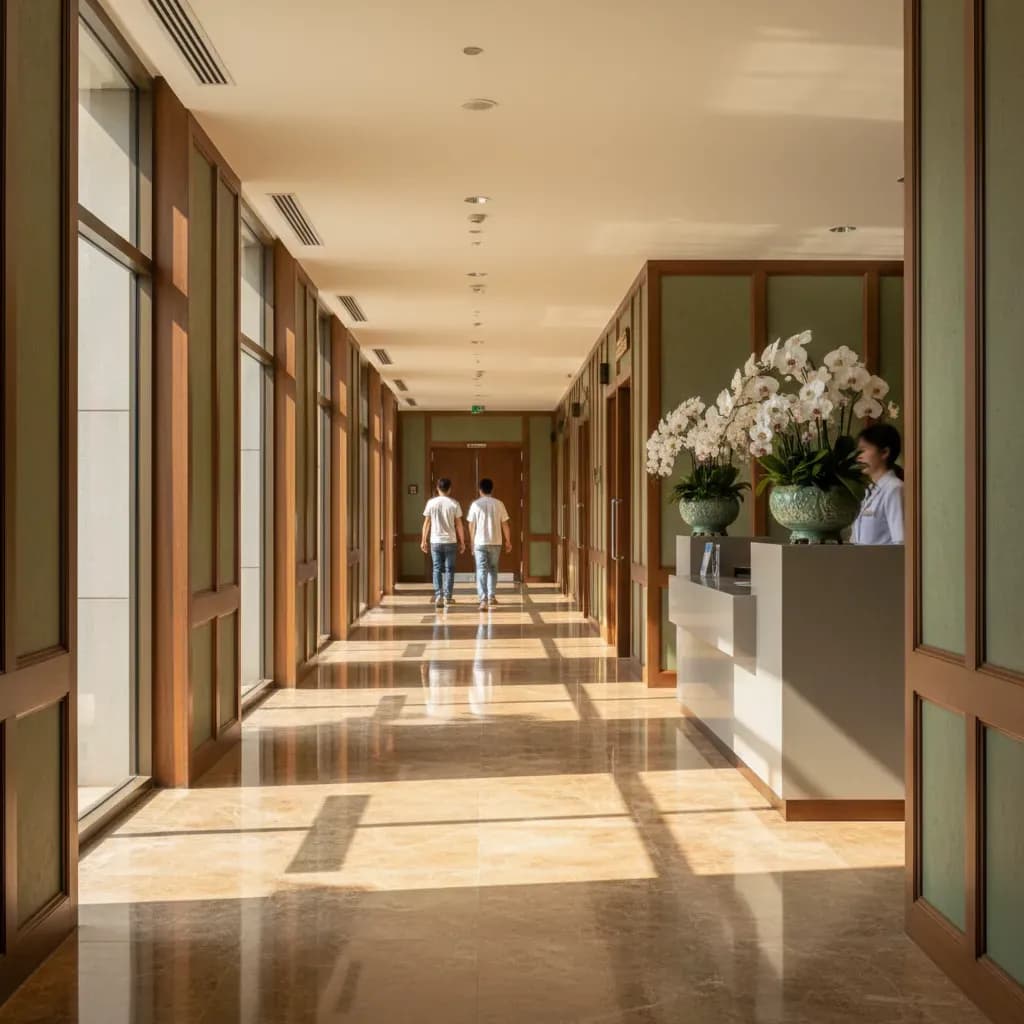
Private hospitals price for a different experience: a scheduled appointment, a doctor who speaks fluent English, same-day lab and imaging results, and a facility that looks and runs like a five-star hotel with a pharmacy attached. That service layer, plus newer equipment and international accreditation overhead, is what pushes a private consultation to ฿1,500–4,500 and a private MRI to ฿20,000–40,000 against ฿7,500 in the public system. You are not paying three times more for better medicine in every case — you are paying for speed, communication, and comfort, which for many expats and short-term visitors is worth it.
Doctor consultation fees, public vs private
| Visit type | Government hospital | Private hospital (standard) | Private hospital (Bumrungrad/Samitivej tier) |
|---|---|---|---|
| General practitioner | ฿500–1,000 | ฿1,500–2,500 | ฿2,500–3,500 |
| Specialist consultation | ฿800–1,500 | ฿2,000–3,500 | ฿3,000–5,000+ |
| Follow-up visit | ฿300–800 | ฿1,000–2,000 | ฿1,500–3,000 |
Source: ExpatDen healthcare cost guides; Phuket Family Health Care Center 2026 pricing guide; Bumrungrad/Samitivej publicly cited consultation ranges · verified July 2026 · ฿33/USD. Flagship international hospitals (Bumrungrad, Samitivej, Bangkok Hospital) sit at the top of the private range; provincial private clinics run 20–40% cheaper.
Bangkok's name-brand international hospitals — Bumrungrad, Samitivej, Bangkok Hospital — charge toward the top of the private range because of their multilingual staff, hotel-style facilities, and accreditation costs. A private hospital in Chiang Mai or a provincial capital delivers similar clinical quality for noticeably less. See the direct comparison in Bumrungrad vs. Bangkok Hospital vs. Samitivej if you are choosing between the big three.
Imaging and procedure prices: the real gap
Consultations are the smallest number on the bill. The bigger public-vs-private gap shows up in imaging and procedures, where private hospitals add facility fees, radiologist reads, and premium equipment costs on top of the base scan.
| Procedure | Government (indicative) | Private (indicative) |
|---|---|---|
| MRI, single region (spine/knee) | ~฿7,500 | ฿10,000–25,000 |
| MRI, full-body | Not typically offered | ฿40,000–60,000 |
| CT scan | ฿3,000–6,000 | ฿8,000–20,000 |
| Health checkup package (basic to comprehensive) | ฿1,000–3,000 | ฿7,000–70,000 |
| Dental implant (per tooth, implant + abutment + crown) | Rarely available to foreigners | ฿39,000–90,000 |
Source: Thaiwebsites.com hospital price tracker; Bumrungrad official 2026 Health Screening Programs; ExpatDen and Konkai.health imaging cost surveys · verified July 2026 · ฿33/USD. Government prices for foreigners at teaching hospitals; provincial public hospitals may differ. Treat every figure as a starting estimate, not a quote.
For scan-specific detail see MRI cost in Thailand and CT scan cost in Thailand. For bigger-ticket procedures — knee and hip replacement, cataract surgery, IVF, heart procedures — the price gap against home-country costs is usually the bigger story than public-vs-private; the medical tourism savings comparison breaks that down by procedure.
Inpatient rooms: what a hospital stay actually costs per night
If a scan or procedure means an overnight stay, the room rate becomes its own line item, separate from the medical bill. At Bumrungrad, standard single rooms run roughly ฿8,000–15,000 a night, with VIP suites from ฿25,000+. Bangkok Hospital's equivalent tiers (Gold, Platinum) run somewhat lower, commonly ฿7,000–10,000 a night, and the hospital is generally cited as 30–40% cheaper than Bumrungrad across comparable services. Across Bangkok's private hospitals broadly, a standard single room is ฿5,000–15,000 a night before any treatment, medication, or nursing charges are added. Government hospital wards charge a small fraction of this, but private single rooms are rarely available and English-language nursing support is limited.
An emergency admission compounds fast: hospitals commonly ask for an upfront deposit of ฿50,000–200,000+ before starting treatment, and a multi-day admission with tests, medication and a private room easily reaches ฿80,000–300,000+ all-in. That scenario, and why insurance changes the math completely, is covered in ER costs in Thailand without insurance.
Is private care actually better, or just more comfortable?
Quality-wise, the honest answer is: often yes, meaningfully — but not because government hospitals practice bad medicine. Thailand has roughly 60 Joint Commission International (JCI)-accredited facilities as of the most recent published counts (2024–2025), one of the largest concentrations in Asia, and the large private chains (Bumrungrad, Bangkok Hospital, Samitivej, BNH) hold multiple JCI certifications across their network. JCI accreditation checks patient-safety protocols, infection control, and clinical governance against the same standard used to evaluate hospitals in the US and Europe — it is a genuine quality signal, not a marketing sticker.
Where private wins clearly: speed (seen within about an hour versus a multi-hour public queue), English communication, same-day imaging results, and a service layer that matters if you are traveling for treatment or juggling insurance paperwork. Where public wins: cost, and for routine, well-understood conditions, clinical outcomes that are frequently just as good. Thailand's private healthcare overall runs an estimated 30–50% below Singapore and roughly 70% below equivalent Western pricing for comparable quality — a major reason the country is a medical tourism destination in its own right. The medical tourism overview covers who actually flies in for care and why.
Why hospital prices in Thailand are hard to pin down
Public price transparency got worse after 2023. Several major private hospitals, including Samitivej, pulled back the detailed online price lists they used to publish, and much of what circulates online now is dated, third-party estimated, or scraped from old brochures. Bumrungrad still publishes current health-checkup package pricing directly, which is why its price list is one of the more reliable public references — but even there, individual procedure quotes (surgery, specialist packages, implants) are usually only given after an in-person or teleconsultation assessment.
The practical rule: treat every number on this page, and every number you find online, as indicative. Before you commit to anything beyond a routine consultation, get a written quote from the hospital's international patient department, itemized by consultation, procedure, room, and estimated length of stay. Ask specifically whether the quote is a fixed package or an estimate subject to complications — the difference matters more than the headline number.
Insurance changes which price actually matters
None of the prices above are what an insured patient pays out of pocket. If you carry an international or Thai expat health plan, your real cost is your deductible, co-pay, and any excluded items, not the hospital's rack rate — and Bangkok's flagship private hospitals (Bumrungrad, Bangkok Hospital, Samitivej) are on nearly every major international insurer's direct-billing network, meaning you often never see a bill at all. If you are uninsured, the government track becomes far more attractive for anything non-urgent. Compare plans on best health insurance for expats in Thailand, and if you already have a plan, how health insurance claims actually work at Thai hospitals explains the direct-billing process so a private-hospital admission does not turn into a cash-flow emergency. Retirees in particular should also budget for the age-related premium climb covered in healthcare costs for retirees in Thailand, since the hospital price gap above compounds with rising insurance costs after 60.
Frequently Asked Questions
Are Thai government hospitals safe for foreigners?
Yes, for routine and even serious care — Thailand's public teaching hospitals (Siriraj, Ramathibodi, Chulalongkorn) are well-regarded and staffed by doctors trained to the same standard as private-hospital physicians, many of whom work both systems. The real tradeoffs are wait time, weaker English support outside Bangkok's flagship public hospitals, and less hotel-style comfort, not clinical competence.
Why is a private hospital MRI three times more expensive than a government hospital?
Private hospitals add facility fees, premium equipment costs, radiologist fees, and a faster turnaround (often same-day) into the price, alongside JCI-accreditation overhead and English-speaking staff. The scan itself uses comparable technology; you are largely paying for speed and service, which pushes a ฿7,500 public MRI to ฿20,000–40,000 privately.
Can I negotiate hospital prices in Thailand?
Sometimes, especially for elective or non-emergency procedures, and especially at mid-tier private hospitals rather than the flagship international chains. Always ask for a written itemized quote first — that document is your negotiating basis and your record if the final bill runs higher than expected.
Do Thai hospitals take international insurance directly?
Most major private hospitals in Bangkok, Phuket, and Chiang Mai have direct-billing agreements with the large international insurers, meaning the hospital bills your insurer directly rather than you paying upfront and claiming later. Confirm your specific insurer and hospital are on each other's network before you need it, not during an emergency.
Is it cheaper to fly home for major surgery than to pay in Thailand?
Rarely, even after flights. Thailand's private hospital prices for major procedures (heart surgery, joint replacement) typically run 40–60% below equivalent US pricing and meaningfully below UK private-pay rates, which is why medical tourism to Thailand exists as an industry. The cost comparison against USA pricing walks through specific procedures.
The bottom line
Thailand runs two genuinely different hospital systems side by side, and the ฿500–1,500 versus ฿1,500–4,500 outpatient gap is really a proxy for a bigger choice: pay less and wait longer, or pay three to five times more for speed, English, and comfort. Neither choice is wrong, and plenty of long-term expats use both — public for routine care, private for anything urgent, specialized, or insurance-covered. The one rule that applies regardless of which door you walk through: treat every price you read, including the ones on this page, as a starting point, and get it in writing before you agree to treatment.
Sources
- ExpatDen, Healthcare Costs in Thailand, accessed 2026-07-10
- Bumrungrad official 2026 Health Screening Programs and Inpatient Accommodation pricing, accessed 2026-07-10
- Bangkok Hospital, Pricing and Payment / Room Rate pages, accessed 2026-07-10
- Phuket Family Health Care Center, 2026 Doctor Consultation Pricing Guide, accessed 2026-07-10
- Joint Commission International, Find Accredited Organizations directory; Statista JCI facility count, accessed 2026-07-10
- Thaiwebsites.com, Package Prices for Diagnostic Procedures at Bangkok Hospitals, accessed 2026-07-10
- Insurance-Thailand.com, Top Hospitals Bangkok for Foreigners 2026, accessed 2026-07-10