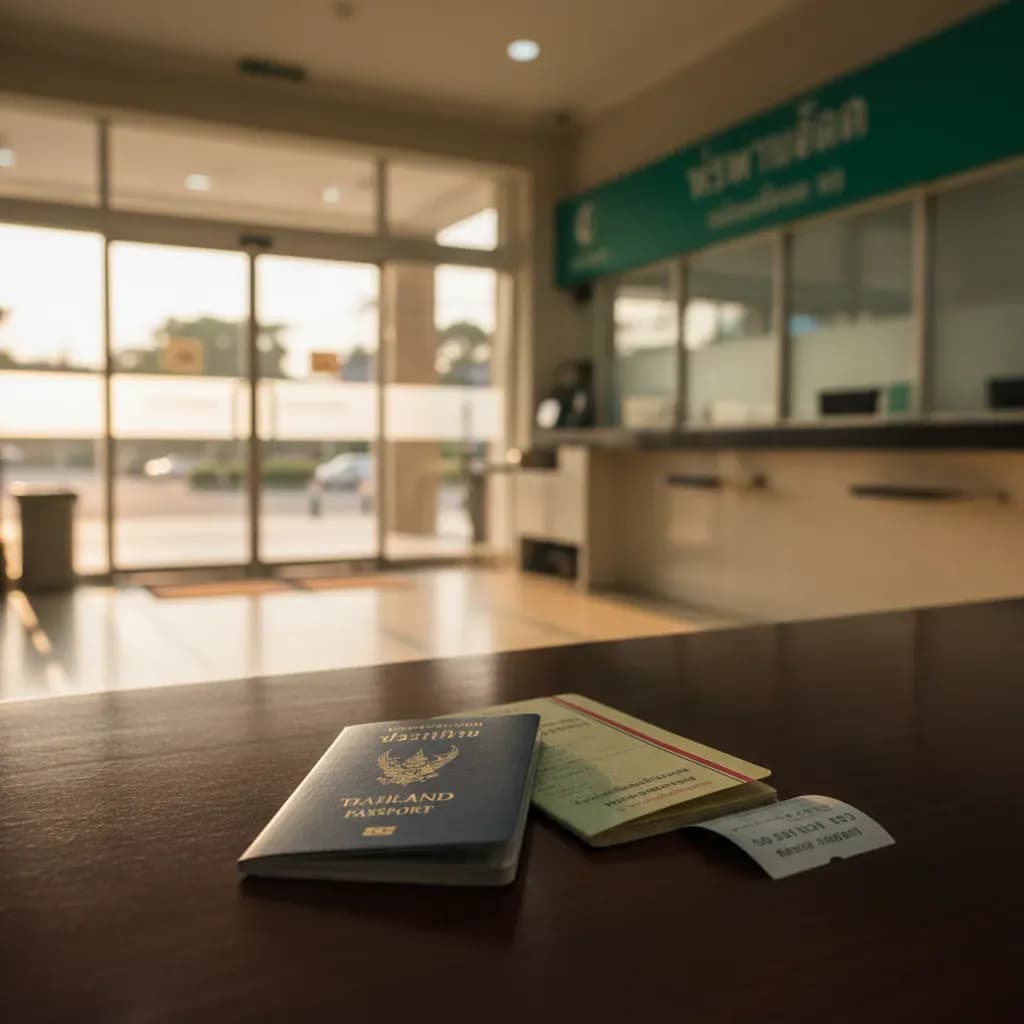
Travel Insurance vs Expat Health Insurance for Long Stays in Thailand
Most travel insurance policies cap a single trip somewhere between 45 and 90 days and won't renew indefinitely, so once you plan to stay in Thailand past a few months on a DTV, retirement, or LTR visa, a $65-a-month travel plan is the wrong product. Expat health insurance costs more, roughly ฿20,000–40,000 a year (~$600–1,200) for a healthy expat in their 30s or 40s on a Thai domestic inpatient-only plan, rising to $150–500 a month with Cigna Global, but it's built to keep covering you every year you live here, including the year you turn 60.
Both products promise "medical coverage abroad" on the marketing page. The differences that matter show up only when you actually need the policy: trip-length caps, pre-existing condition exclusions, and whether the insurer still takes your money next year.
Quick answer
- Travel insurance trip caps: most annual/multi-trip plans limit any single trip to 45 days (Allianz, some World Nomads plans); single-trip plans stretch to 90–180 days, then end, no renewal.
- SafetyWing Nomad Insurance: renews every 28 days for up to 364 days, ages 10–39 around $63/4 weeks (~฿2,080), ages 60–69 $218+/month (~฿7,200+), entry cutoff age 64.
- Thai domestic expat insurance (Pacific Cross, AXA): roughly ฿20,000–40,000/yr (~$600–1,200) for inpatient-only cover in your 30s–40s, but most stop accepting new applicants at 65–70.
- Cigna Global (international): $150–500+/month by tier, no upper enrollment age, guaranteed renewable for life.
- Visa insurance rules differ: O-A needs an OIC-approved insurer at ฿3,000,000 / $100,000 total; DTV depends on the embassy, commonly $50,000 when asked for; LTR needs $50,000 cover or a $100,000 deposit/benefits alternative.
- Get written quotes. Pricing and enrollment cutoffs change by insurer and year — treat every number here as a 2026 band.
Where travel insurance actually stops working
Travel insurance is built around the idea of a trip: you leave home, you come back, the policy ends. Three hard limits trip up expats who try to stretch it.
The per-trip day cap. Annual multi-trip travel insurance, bought to cover unlimited trips in a year, almost always caps each individual trip at around 45 days even though the policy runs 12 months — Allianz's annual plans and several World Nomads annual products both work this way. A single-trip policy can run up to 180 days with some US providers, but once that window closes the policy ends. Nothing renews it into year two while you keep living in the same condo.
Even the generous subscription products have a ceiling. SafetyWing's Nomad Insurance bills every 4 weeks and auto-renews with no fixed trip cap, up to a maximum of 364 days before restart — useful for a nomad bouncing between countries, and one of the few programs with well-documented affiliate terms (roughly a 10% revenue share, though SafetyWing itself only calls it "approximately 10%, benchmarked"). But it caps new enrollment at age 64, and if you settle in one country for 90+ days it only keeps you covered for 30 days back home afterward (15 for the US). It suits people who keep moving, not someone building a life in one place.
No outpatient or routine care. Travel insurance is emergency-and-evacuation coverage, never built for a GP visit, a repeat prescription, or a chronic condition managed over years. See outpatient vs inpatient-only cover before assuming any plan covers a routine visit.
What expat health insurance actually is
Expat health insurance is annual, renewable, medically underwritten cover for residents, not tourists, and it splits into two tiers that price very differently.
Thai domestic plans (Pacific Cross, AXA Thailand) are the budget end. Inpatient-only cover for a healthy adult in their 30s or 40s runs about ฿20,000–35,000 a year (~$600–1,050), and adding outpatient cover pushes that up 30–50%. The catch: most stop accepting new applicants somewhere between 65 and 70, and premiums step up sharply with age — roughly ฿22,900/yr at 56–60, ฿37,700/yr at 66–70, ฿56,100/yr at 71–75 for entry tiers, with top tiers running ฿200,000+. A plan bought at 45 usually renews past 70; you generally cannot walk in fresh at 68.
International insurers (Cigna Global is the standard comparison) cost far more but solve the age problem: tiers run roughly Silver $150–250, Gold $250–350, Platinum $350–500/month, with no upper enrollment age and guaranteed renewal for life once accepted. See SafetyWing vs Genki vs Cigna and health insurance over 60/70 for the age-premium cliff. Insuring before 65 is usually cheaper over a decade than waiting.
Cost and coverage compared (July 2026)
| Feature | Travel insurance (SafetyWing-style) | Thai domestic expat plan (Pacific Cross/AXA-style) | International expat plan (Cigna Global-style) |
|---|---|---|---|
| Typical annual cost | ฿20,000–40,000/yr (~$600–1,200) | $1,800–6,000+/yr ($150–500+/mo) | |
| Max continuous coverage | 364 days, then must restart | Annual, renewable indefinitely if accepted | Annual, renewable for life once enrolled |
| New-enrollment age cutoff | 64 | Usually 65–70 | None on most tiers |
| Routine outpatient/GP visits | Not covered | Optional add-on, +30–50% premium | Included on most tiers |
| Pre-existing conditions | Excluded | Often excluded or loaded | Case-by-case, sometimes covered after waiting period |
| Satisfies O-A/LTR visa insurance rule | No (not OIC-approved for O-A) | Yes, if OIC-approved | Yes, most major international insurers qualify |
Source: SafetyWing pricing pages; insurance-thailand.com senior and IPD-only guides; thailand-insurance.net Cigna Global tier comparison · figures indicative, verified July 2026 · ฿33/USD. Get a written quote before buying — insurer terms and age bands change without notice.
The pattern is straightforward: travel insurance is the cheapest option for the first year and the worst option for year five, because it was never priced or underwritten to keep you as a resident.
Which visa actually requires which insurance
Thailand's three long-stay visa routes treat insurance differently, and the rules are not interchangeable.
| Visa | Insurance requirement | Approved-insurer list? |
|---|---|---|
| DTV (Destination Thailand Visa) | Not a blanket national requirement; some embassies ask for it, commonly $50,000 minimum when they do | No fixed list — most reputable international insurers accepted |
| O-A / O-X retirement | ฿3,000,000 / $100,000 total coverage (inpatient + outpatient combined), current standard as of 2026 | Yes — must be an OIC-approved insurer from Thailand's official list |
| LTR (Long-Term Resident) | $50,000 health coverage, OR a $100,000 bank deposit, OR $100,000 in Social Security-type benefits | No fixed list, broader acceptance than O-A |
Source: insurance-thailand.com DTV Visa Insurance 2026; Expat Compares DTV/LTR insurance guide 2026; TGIA longstay.tgia.org O-A guideline; Thai Visa Services LTR requirements · verified July 2026.
The DTV's rule is genuinely inconsistent, depending on which embassy processes your application, not one national minimum. See DTV visa insurance requirements for detail; the DTV's separate 500,000 THB funds rule is different entirely — check it against the DTV funds checker. The O-A rule is the strictest, demanding an OIC-approved insurer at the 3-million-baht total figure — an older 40,000/400,000 THB split still circulates but is outdated; see O-A visa insurance for qualifying insurers and LTR financial requirements for LTR's picture. None of this touches Thai Social Security (SSO), a cheaper option for expats employed under a work permit — see Thai Social Security for expats.
When travel insurance is genuinely fine
It still makes sense narrowly: a first scouting trip before committing to a visa, a bridging gap between an expiring domestic policy and a new one, or a nomad moving country every month or two rather than settling. If your total time in Thailand this year lands under the 45–90 day range most annual travel plans allow per trip, it's the cheaper choice.
The moment you sign a 12-month lease or apply for a long-stay visa, the calculation flips. Budget the real annual figure into your cost of living rather than treating insurance as an afterthought.
Frequently Asked Questions
Can I use travel insurance instead of expat health insurance in Thailand?
Only short-term. Most travel insurance caps a single trip at 45–90 days and was never underwritten for outpatient care or renewing into your fifth year here. SafetyWing stretches furthest, up to 364 days, but won't satisfy the O-A visa's OIC-approved insurer rule and stops taking new applicants at 64.
Does the DTV visa require health insurance?
Not as a single national rule — it depends on the embassy. Some ask for proof of coverage, commonly around $50,000 minimum; others don't request it at all. This is separate from the DTV's 500,000 THB funds requirement, which every applicant needs regardless.
What insurance does the O-A retirement visa require?
Coverage from an OIC-approved Thai insurer meeting a ฿3,000,000 (~$100,000) total limit combining inpatient and outpatient care. This is the current 2026 standard; older sources citing a 40,000/400,000 THB split are outdated.
At what age should I switch from travel insurance to expat health insurance?
Before Thai domestic insurers cut off new applicants, typically 65–70. Premiums on both domestic and travel-style plans escalate hard through your 60s, so locking in a guaranteed-renewable plan like Cigna Global in your 50s or early 60s usually beats waiting.
Is Thai domestic insurance or international insurance cheaper for expats?
Domestic plans are cheaper year to year, roughly ฿20,000–40,000 versus $1,800–6,000+ for international cover. The trade-off is enrollment: domestic insurers stop taking new applicants at 65–70, while insurers like Cigna Global have no upper age limit and renew for life once you're on the policy.
The bottom line
Travel insurance and expat health insurance solve different problems, even though both get marketed as "coverage in Thailand." Travel insurance is cheap and fine for a trip, but it was never built to renew forever or satisfy Thailand's visa insurance rules. Expat health insurance costs more, but it's the product built to still cover you in year ten.
Sources
- SafetyWing Nomad Insurance policy and pricing pages, accessed 2026-07-10
- World Nomads USA, Annual Multi-Trip vs Single Trip Travel Insurance, accessed 2026-07-10
- Allianz Travel Insurance, Annual Travel Insurance coverage limits, accessed 2026-07-10
- insurance-thailand.com, Thailand DTV Visa Insurance 2026, accessed 2026-07-10
- Expat Compares, Best Health Insurance in Thailand for DTV and LTR Visa Holders 2026, accessed 2026-07-10
- TGIA longstay.tgia.org O-A insurance guideline, accessed 2026-07-10
- insurance-thailand.com senior expat health insurance guide, 2026