Is Thai Social Security (SSO) Enough for Expats?
If you work legally in Thailand on a Non-B visa and work permit, your employer must enroll you in the Social Security Office (SSO) scheme, and it's cheap: about ฿750 a month (~$23) through the end of 2025, rising to a capped ฿875 a month (~$27) from January 2026 under a new, higher wage ceiling. That premium buys real medical cover, sick pay, and eventually a pension — but not hospital choice. You're assigned to one designated facility, and treatment anywhere else outside a genuine emergency is on you. For most working expats, SSO is a floor worth having, not a ceiling worth relying on.
Quick answer
- Cost 2026: capped at ฿875/month (up from ฿750) — 5% of salary, employer matches it, wage base rose from ฿15,000 to ฿17,500
- Who's covered: foreign employees on a work permit under Section 33 — not DTV, retirement (O-A/Non-O), LTR, or Elite visa holders, since none of those are "employed"
- The catch: one designated hospital, chosen at enrollment; you can normally change it only once a year
- Sickness cash benefit: needs 3 months of contributions in the past 15 months; unemployment benefit needs 6 months
- Old-age pension: needs 180 months (15 years) of contributions for a monthly payout; shorter tenure gets a lump-sum refund instead
- Realistic move: keep SSO and add a private inpatient-only plan (~฿20,000–40,000/yr) for the gaps that actually bite
What SSO costs in 2026
Both you and your employer pay 5% of your monthly salary into the fund, but only up to a capped wage base — and that cap just moved. Through 2025 the ceiling sat at ฿15,000, capping the contribution at ฿750 per side. From January 2026 the ceiling rose to ฿17,500, pushing the maximum monthly contribution to ฿875. A second increase is already scheduled for 2029.
| Period | Wage ceiling | Max monthly contribution (each side) | Max annual (employee) |
|---|---|---|---|
| Through Dec 2025 | ฿15,000 | ฿750 (~$23) | |
| Jan 2026–Dec 2028 (Phase 1) | ฿17,500 | ฿875 (~$27) | |
| Jan 2029–Dec 2031 (Phase 2) | ฿20,000 | ฿1,000 (~$30) |
Source: RLC Outsourcing / HLB Thailand, "New SSO Salary Ceiling and Contribution Changes 2026" · verified July 2026 · ฿33/USD. The government adds a smaller top-up share; if your salary is below the ceiling you pay 5% of actual salary, not the flat cap.
Set against private cover, this is genuinely cheap. A basic inpatient-only plan for a healthy expat in their 30s or 40s runs roughly ฿20,000–40,000 a year on the private market — two to four times SSO's cost for a much narrower government scheme. That gap is the whole story of this page.
Who actually qualifies
Section 33 coverage is automatic for any foreigner legally employed under a Non-B visa and work permit at a company with staff, as long as you're on payroll and your employer deducts the contribution. It's not available to DTV holders, retirees on an O-A or Non-O extension, LTR holders, or Thailand Elite members, since none of those statuses count as employment. Retirees need their own qualifying private policy regardless — the O-A visa's own insurance requirement runs to a 3,000,000 THB / USD 100,000 total coverage limit from an OIC-approved insurer, and SSO cannot substitute for it.
If you leave SSO-eligible employment, you can usually continue voluntarily under Section 39 within six months for a modest self-paid fee — worth asking your local SSO office about before the window lapses.
The designated hospital limit — the real catch
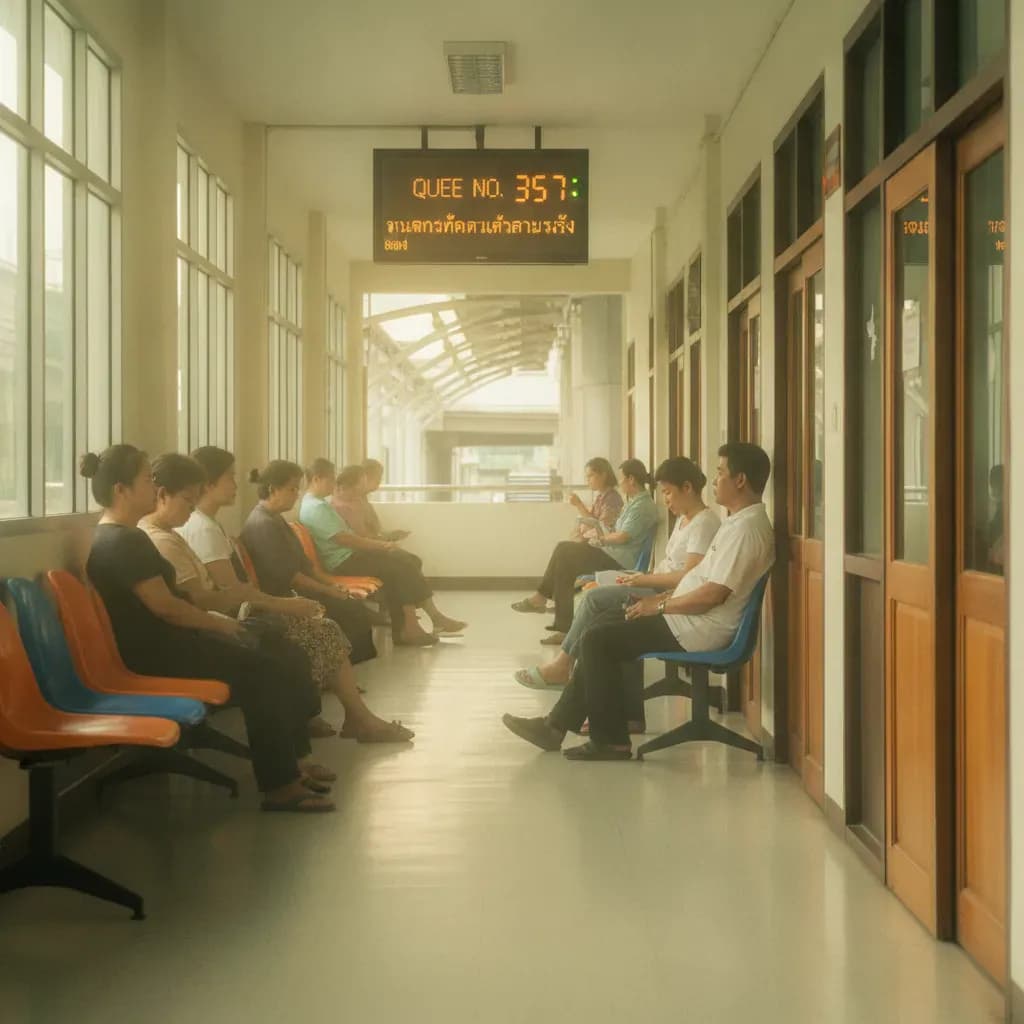
This is the part most new SSO members miss. At enrollment you pick one hospital or clinic from your province's approved list (via SSO form 9-02, the SSO Connect app, or the SSO Line account), and that becomes your default provider for routine and even most inpatient care, changeable only once a year. Turn up somewhere else for a non-emergency and the fund generally won't pay. The list leans toward public hospitals and mid-tier private facilities — Bumrungrad, Samitivej, and the premium Bangkok Hospital network campuses generally aren't on it, though some other private hospitals do participate in specific provinces. Check your own province's list before assuming your preferred hospital qualifies; it usually doesn't.
Genuine emergencies are the one carve-out. SSO allows treatment at any hospital for a life-threatening emergency, with no upfront deposit required for roughly the first 72 hours, and Thailand's Supreme Court has previously ordered SSO to reimburse patients treated outside their designated hospital in a true emergency. But "reimburse" is the operative word — you often pay first at a private ER and claim back later, capped by a fee schedule well below what was billed. Cited figures vary by source (confirm via SSO hotline 1506), but commonly quoted ranges run around ฿2,000/day for non-ICU inpatient plus ~฿700/day for room and food, ~฿4,500/day inclusive for ICU, and roughly ฿1,000–2,000 per outpatient emergency visit — nowhere near a real bill. A moderate ER visit with a few days of private admission in Bangkok can run ฿80,000–300,000+ all-in. See what ER treatment actually costs without insurance.
Sickness pay, dental, and the pension you're building
SSO also pays modest cash benefits alongside medical treatment. A sickness cash benefit (roughly half of capped wages for days off beyond what your employer must pay) requires 3 months of contributions in the preceding 15 months; unemployment benefit requires 6 months in the preceding 15 months. Smaller benefits exist for maternity, disability, and death (funeral grant), each with its own qualifying period.
Dental care historically reimbursed a modest ฿900 a year for cleanings, fillings, extractions, and wisdom-tooth removal. From 1 May 2026 the SSO expanded dental coverage significantly, adding dentures and implants to the reimbursable list — a genuine upgrade, though exact new caps are best confirmed directly with SSO, since reporting on the rollout is still settling.
The benefit most expats never stick around for is the pension: contribute 180 months (15 years) and you unlock a monthly old-age pension equal to roughly 20% of your average wage over the last 60 months, rising with extra years. Fall short — the common outcome for expats who work a few years and move on — and you get a lump-sum refund of contributions (with some interest) instead.
SSO versus a private inpatient-only plan
| SSO (Section 33) | Private IPD-only, healthy 30s–40s | |
|---|---|---|
| Annual cost (2026) | ~฿9,000–10,500 | ~฿20,000–40,000 |
| Hospital choice | One designated hospital; emergency-only elsewhere | Any network hospital, often direct billing |
| Inpatient cap | ~฿2,000–4,500/day depending on ward | Full sum insured, often ฿1M+ |
| Family cover | No — insured worker only | Yes, each member insured separately |
| Coverage after job ends | Stops (unless self-paid under Section 39) | Continues as long as premiums are paid |
Source: ExpatDen, "Thailand SSO vs Private Health Insurance" (2026); Thailand Ultimate insurance dataset cross-referenced with insurance-thailand.com · verified July 2026 · ฿33/USD. SSO caps are indicative — confirm current figures with SSO hotline 1506.
The pattern is consistent: SSO is cheap and real, but narrow. It doesn't cover a spouse or kids, it stops the day you're between jobs (absent Section 39), and it caps payouts far below a serious hospitalization at a hospital you didn't choose. Compare plans on the cheapest expat health insurance roundup or the fuller best health insurance for expats guide, and see how Thai domestic insurers stack up against international ones if you're weighing a top-up policy.
Frequently Asked Questions
Do foreigners have to join Thai Social Security?
Yes, if you're legally employed on a work permit under Section 33 — enrollment is automatic, deducted from payroll alongside your employer's matching contribution. It doesn't apply to non-employment visas like DTV, retirement extensions, LTR, or Thailand Elite.
How much does Thai Social Security cost in 2026?
Both you and your employer pay 5% of salary, capped at ฿875 a month each from January 2026 (up from ฿750 through 2025), because the wage ceiling rose from ฿15,000 to ฿17,500. Earn less than the ceiling and you pay 5% of actual salary instead of the flat cap.
Can I use SSO at any hospital?
No. You choose one designated hospital at enrollment and are generally limited to it for non-emergency care, with a once-a-year window to switch. Genuine life-threatening emergencies can be treated anywhere, with reimbursement capped by a fee schedule rather than paid in full.
Does SSO cover my spouse and children?
Not for medical treatment in the way a private family policy does — SSO's health benefit covers the insured worker, not dependents, though there are separate smaller cash benefits like maternity and child support tied to your own contribution record.
Is SSO enough to meet a visa's health insurance requirement?
Generally no. The O-A retirement visa, for example, requires a specific OIC-approved policy with a 3,000,000 THB / USD 100,000 total coverage limit, and SSO doesn't qualify as a substitute even for employed foreigners who happen to hold it.
The bottom line
SSO is one of the best-value products in the Thai insurance market on price alone, and it's worth keeping even if you also buy private cover. But it was built as a social-insurance floor, not an expat health plan: one hospital, capped emergency payouts, no dependents, and no coverage the moment your work permit ends. Most working expats who can afford it run SSO alongside an inpatient-only private policy — ฿750–875 a month buys sick pay and a future pension, while the private plan buys the hospital and the payout you'd actually want in a real emergency.
Sources
- Acclime Thailand, Social security in Thailand: Explained, accessed 2026-07-10
- RLC Outsourcing / HLB Thailand, New SSO Salary Ceiling and Contribution Changes 2026, accessed 2026-07-10
- ExpatDen, Social Security in Thailand for Foreigners and Its Benefits (2026), accessed 2026-07-10
- ExpatDen, Thailand SSO vs Private Health Insurance: Which One Is Better?, accessed 2026-07-10
- CDC Dental / Coach HCM, Social Security Dental Benefits 2026, accessed 2026-07-10